Finally, I picked up a specialty brand of salsa, Pedro's, at Wal-Mart; lo and behold, it had the same magic qualities that the GarduƱo’s brand had had. Pedro's salsa is expensive (almost $4.00 for a 16 oz. jar [roughly three servings for me], even at Wal-Mart), but I find myself splurging once in a while just to get my chile fix. Pedro's is a local concern, owned by Pedro and Kathy Ruiz (see picture); its website is found at http://www.pedros-salsas.com/index.html.
Saturday, May 29, 2010
The Search for the Perfect Salsa - Pedro's
Finally, I picked up a specialty brand of salsa, Pedro's, at Wal-Mart; lo and behold, it had the same magic qualities that the GarduƱo’s brand had had. Pedro's salsa is expensive (almost $4.00 for a 16 oz. jar [roughly three servings for me], even at Wal-Mart), but I find myself splurging once in a while just to get my chile fix. Pedro's is a local concern, owned by Pedro and Kathy Ruiz (see picture); its website is found at http://www.pedros-salsas.com/index.html.
Wednesday, May 26, 2010
Cabin Trip, May 2010
We didn't do a whole lot while we were at the cabin. Monday was a cold day, feeling more like late March than late May. We drove up to the summit of Wolf Creek Pass, and then back down to the "scenic overlook" and Treasure Falls, but we only barely got out of the car due to the chill. We drove back into Pagosa Springs and did some shopping and had lunch at the Malt Shoppe, and then we decided to brave the cold and try tubing in the river. As was the case a couple of summers ago, the "Rito Blanco," the tributary of the Rio Blanco that joins the latter right there at the cabin property, was running high and afforded a fairly wild ride (we lashed three tubes together and rode as a trio) -- especially with a few newly fallen tree branches that got in the way. I was pretty blue (actually red) with cold by the time we finished a second ride that day and was happy to go take a hot shower.
On Tuesday, we drove back into town and did a few things. We bought river shoes for Kiley and then went to the candy shop underneath the theater to buy fudge and some other goodies. Then we walked along the San Juan for a while before going back to the Malt Shoppe for soft-serve ice cream cones. Finally, we returned to the cabin, and, since the weather was at least ten degrees warmer than the previous day, the river sounded a little more appealing. We did the "Rito" twice more, together, before untying the tubes, at which point Darren and Kiley rode twice on the "Rio" from the bridge around to our usual getting-out point.
For entertainment, we watched a few movies, played Monopoly Deal (a card game at which I suck, pure and simple), and surfed the Internet and checked e-mail messages on my laptop. (The neighbors across the road keep their satellite wireless network "open," apparently so that people at our cabin can log on to it. Awfully nice of them!) Darren and Kiley also put together a couple of jigsaw puzzles, something for which I've come to have little patience. There was a lot of traffic up and down the road, causing me to conclude there must be some construction going on somewhere down at the end of the road.
Finally, we came back fairly early today so that I could get back in time for my temple shift. It would have been nice to stay longer, but at least I'll have another four-day weekend for Memorial Day.
Saturday, May 22, 2010
Kiley's High School Graduation
Kiley won the school music award in the senior awards assembly on Thursday, as she was one of the top cellists this year in the Albuquerque Youth Symphony and she won an award as the outstanding bass player in the Albuquerque Jazz Festival, in which her school jazz band participated. (The electric bass was definitely Kiley's second instrument, although, with all her cello training -- especially her use of all four fingers on her left hand -- she looked like a pro bassist on stage.) Kiley will be attending the University of New Mexico this fall on a music scholarship.
Wednesday, May 5, 2010
On Turning 51
I've been drawing a lot of comparisons in my mind lately between serving a church mission and dying. When I went on my mission, was I as prepared for it as I could have been? No. Was I as prepared for it as I needed to be? Debatable. Was I as prepared for it as I ever would be? Absolutely! One reason I had difficulty finding motivation to serve a mission had to do with the "mission prep" priesthood-meeting class we had in the BYU 65th Branch during my freshman year, 1977-78, which was taught by people (including one son of a general authority) whom I regarded as extroverted narcissists. They seemed to believe that there was only one personality type (hard-driving and hard-selling) that could possibly be of any use to a missionary, and that anyone else would be wasting his time in the mission field. It wasn't until my stake president at home in Albuquerque, Jay Payne (who, after I'd been on my mission for only four or five months, died suddenly of a heart attack while jogging one morning), assured me that the Lord needed all kinds of personalities in the mission field, and that I could be an effective missionary without trying to change mine, that I began in earnest to prepare. It's difficult to say how good a missionary I really was -- I did a few things that I later regretted, and I certainly wasn't the hardest worker, by any means, in my mission. However, I had my share of unique struggles -- particularly with my health, as I suffered from low-grade nausea for virtually the entire time I was in Chile. I never stopped trying, and I never stopped working, even if I often wasn't as effective as I might have been had I felt better (and if other circumstances -- certain companions, certain areas, my first mission president -- had been different).
The analogy of a mission to death seems obvious. Per Mormon doctrine, am I as prepared to die, at this juncture of my life, as I could be? No. Am I as prepared to die as I need to be to reach the Celestial Kingdom? Debatable (highly so). Am I as prepared to die as I ever will be? Well, that's the question that's been weighing on my mind for some time. What I struggle with most is the disconnect between (a) the notion that our eternal reward will hinge on what we did with what we had (i.e., that a person's individual circumstances -- his talents, upbringing, DNA [now there's a topic you'll never hear discussed in General Conference!], overall experiences, and sacrifices made relative to resources [whether financial, emotional, physical, or spiritual] -- will be taken into account in the Final Judgement), and (b) the take-away from practically all church meetings, which is that there is some objective (if intangible and unknowable) threshold of personal righteousness or individual perfection -- which applies to all people regardless of circumstance -- that one must achieve before having any hope that the Atonement of Christ will fill in the gaps, as it were, of his personal failings and weaknesses as concerns reaching the Celestial Kingdom. I have church leaders now who seem to believe -- reminiscent of my priesthood instructors all those years ago at BYU -- that one must be some kind of Stepford Mormon and that anyone else (e.g., someone with a sense of humor or who purposely doesn't conform in order to maintain some kind of individuality or to avoid being saddled with what are, for him, intolerable burdens or responsibilities) is wasting his time. I hear church members suggest from time to time that there will be all kinds of people in the Celestial Kingdom, but, since that message never, ever comes from the leadership, I tend not to take it to heart.
So what kind of person have I been? I certainly haven't been precisely the kind of husband, father, friend, breadwinner, and priesthood holder that I could have been. I've done things that I've regretted, and likewise I've failed to do things that I wish I'd done. However, as was the case with my mission, my life in general has posed its own peculiar set of struggles -- my health issues becoming increasingly prominent among them -- and it is true that I've never given up or stopped trying. It's sometimes annoying to realize just how many people in my life seem to regard me as (to borrow a phrase from the movie Little Big Man) a "perfect reverse barometer" -- which I define, in my case, as someone whom others use to feel good about themselves by comparison -- but I've never let that completely discourage me or cause me to hate anyone. I'm not as good a person as I could be, or could have been under other life circumstances, and, again, the question is how much my circumstances will be taken into account (assuming there truly is a Hereafter). If my testimony has taken a battering over time, it is due to the implicit, unrelenting message from the pulpit that individual circumstances are immaterial and that one must be objectively as righteous as Brother X or Sister Y to have any hope of attaining exaltation. I can't be like Brother X or Sister Y (assuming they themselves aren't, after all, whited sepulchres), and I don't want to be, so I continually question whether or not my efforts as a church member are a waste of time.
Saturday, May 1, 2010
The U.S. at the World Cup
The 2010 (men's soccer) World Cup will be played in South Africa in the latter half of June and the first half of July. I, of course, will be rooting for the United States, although how they'll perform in the tournament is a real question mark. In last year's Confederations Cup tournament, the U.S., which had a lackluster preliminary round (but then squeaked into the "knockout" stage by beating Egypt 3-0, the precise margin of victory it had to have in order to advance), defeated Spain, the #1 rated team in the world, 2-0, and then led Brazil, favored by many to win the World Cup this year, by two goals in the championship before conceding three in the second half, proving that it can do some damage when the ball falls the right way. It's too much to expect our guys to win four successive "knockout" round games at the World Cup, but it will be a major disappointment if they don't make it out of the group qualifying stage, especially with the draw they got (England, Slovenia, and Algeria).However, the U.S. is still facing an uphill battle. One, we have a pretty limited pool of top-notch talent, and key injuries (especially to Charlie Davies, our fastest forward, and Oguchi Onyewu, our best central defender in a back line that has not otherwise distinguished itself in qualifying) have not helped. It's hard to say we have any world-class players; we have several who are capable of world-class play, especially Tim Howard (goalkeeper whose heroics in net can, and all too often must, compensate for the deficiencies of his back line), Clint Dempsey (see photo above -- search on Youtube for his brilliant goals this season for his EPL club team Fulham against Stoke City and Juventus, not to mention the opener against Brazil last year), and Landon Donovan (who, although he has a history of blending into the landscape against the better sides, has made some great goals lately, especially the second goal against Brazil last year, which came at the end of what was about the closest thing to a perfectly executed two-on-two "fast break" that you'll ever see in a soccer game at any level of play), but all of them will have to come up big merely for the U.S. to make it out of group play. Two, whereas the team's coach, the home-grown Bob Bradley, did succeed in getting the Americans to qualify in first place in the CONCACAF region, it's easy to wonder sometimes if he really knows what he's doing, especially when his players look lost and uncomfortable in their assigned positions, which happens dismayingly often. And three, the U.S. plays England, the top-rated team in its group, in the first game, and if it doesn't secure a result (win or tie) in that game, it will feel all the more pressure to play well against Slovenia and Algeria, which are fairly unknown quantities. Still, there are lots of countries who'd like to be in the U.S.'s shoes but instead are staying home, so we'll see how things play out.
Wednesday, April 28, 2010
"Rally" Scoring and the Ruination of Volleyball
I was never particularly good at volleyball, except within the context of the stake men's league we used to have at church. However, I have always liked to watch good volleyball being played, so it interests me whenever rule changes are implemented. Four significant rule changes that have occurred since I played are (1) the "legalization" of the two-hand "soft dig" (or "beach dig," as we used to call it), which was always called a double-contact in the old days, (2) a serve's being called "in" that hits the top of the net and falls over into the opponent's side of the court; (3) the ability to serve from anywhere on the back line; and (4) the creation of the "libero" position (a back-row player, a sort of "designated" digger or serve-receiver, who can be inserted at multiple positions in his team's rotation). Two additional changes in strategy, which did not entail major rule changes but have changed the game greatly, are (1) the jump serve (which in turn has placed a premium on passing skills); and (2) widespread use of the "5-1" system, where one setter sets from all six positions in the rotation (which in turn requires one attacker from the back row when the setter is playing in the front row).However, the rule change that, in my view, has had the biggest impact -- an extremely negative impact -- is the implementation of so-called "rally" scoring, where every serve produces a point. (In the old days, only the serving team could win a point -- the other team played to win the serve.) I guess the rationale was to speed up the game, which it definitely has done, despite the fact that it now it takes 25 or 30 points to win a game instead of 15. However, it also makes it extremely difficult for a team to come back from any significant deficit, because the team that's ahead only has to keep "siding out" to win the game. Also, given that it's generally much easier to win a point when receiving serve than when serving, "rally" scoring tends to punish a team that has won a point by making it serve the next point. The logic seems backward to me: if the rule-makers really want to speed up the game, why not make a team serve until it wins a point, then make the other team serve until it wins a point, and so forth? It is for these reasons that "rally" scoring has practically ruined volleyball in my opinion.
Tuesday, April 27, 2010
The Church and Pornography
I've been doing a lot of thinking about the topic of pornography lately, especially as general and local church authorities have made repeated references to it, which in turn suggests that it is a bigger problem in the church than the membership at large can guess. I've wondered how I can address my feelings on this topic without appearing to defend pornography and those who indulge in it; therefore, let me say first that I do indeed believe that pornography, in all its forms, is evil and a thing to be avoided by persons who aspire to live the Gospel of Jesus Christ.However, I've concluded that a man's use of pornography, and the "self abuse" that almost necessarily results therefrom, can be (and probably most often is) a greater sign of a defect in the fabric holding his marriage together than a defect in his character per se -- the latter being the message that usually comes across in church discourses on the subject. This is a crucial distinction, because once one accepts that the true weakness is in the marital bond, not in the man, it becomes clear that responsibility for the use of pornography extends beyond a man's capacity for self-mastery.
To illustrate the point, let me cite two general authorities from two different eras of church history. The first is Heber C. Kimball, who was an apostle and a member of the First Presidency serving under Brigham Young in the mid-19th Century. To give context to this statement, remember that it was made during a time when the Church was (a) practicing plural marriage, and (b) having to defend the practice against a litany of attacks from both outside and inside the Church. Quoth Elder Kimball:
I have noticed that a man who has but one wife, and is inclined to that doctrine, soon begins to wither and dry up, while a man who goes into plurality looks fresh, young and sprightly. Why is this? Because God loves that man, and because he honors his word. Some of you may not believe this, but I not only believe it but I also know it. For a man to be confined to one woman is small business. ... I do not know what we should do if we had only one wife apiece. (Deseret News, April 22, 1857.*)* I can't vouch for the primary source of the citation, as the quote comes from an independent website, but it jibes with similar sentiments published at around the same time.
I don't know how much to read into Elder Kimball's remarks -- I'm certainly no big proponent of polygamy -- although it is clear that church leaders of the time considered monogamy to be both an unnatural social construct and the source of impulses leading to adultery, prostitution, and the spread of disease (cf. Journal of Discourses, particularly Volumes 4 and 13). One thing that Elder Kimball does appear to be saying, however, is that having regular physical relations with his wife (or wives) is good for a man's constitution.
The second quote is from Elder Boyd K. Packer, the current president of the Quorum of the Twelve:
It was necessary that this power of [procreation] have at least two dimensions. One, it must be strong, and two, it must be more or less constant. This power must be strong. Except for the compelling persuasion of these feelings, men would be reluctant to accept the responsibility of sustaining a home and a family. This power must be constant, too, for it becomes a binding tie in family life. (Young Women Manual 2, lesson titled "The Sacred Power of Procreation.")Elder Packer seems to be saying that without regular expression of these "strong" and "more or less constant" feelings, men perforce have almost no inclination toward marriage. Let's put it in plain words: absent sex on a regular basis, men find marriage less appealing and, in general, feel less strongly bound to their wives and more attracted to other women. Considering Elder Kimball's words with Elder Packer's, one is led to the conclusion that it is not only possible for a married man to be sex-starved, but for that state to be healthy neither for him individually nor for the marriage in general. Why should it be any great surprise, then, for a man, even a Melchizedek priesthood holder, who feels thus starved, to say to himself, "Heck, I didn't get married to be celibate!" and to seek another outlet (one that, for the most part, falls short of divorce and remarriage to some equally sex-starved, perhaps younger woman)?
Again, I don't say this to defend pornography or those who use it (especially those who truly do become obsessed with it or addicted to it, and/or who allow it to distort or pervert their view of -- and particularly their actions toward -- the opposite sex). But it would be nice if someone in a position of authority in the church stated the obvious: (1) that a lack of marital intimacy (whether relative or complete) is a large, and perhaps the largest, contributing factor in setting married men on the pornography path; and (2) that there is a simple fix in many, if not most cases. However, that would suggest that wives bear some responsibility for their husbands' actions -- never mind the sheer inconvenience of the obvious remedy -- and that appears to be too much to expect in the church these days. (Unlike in Elder Kimball's day, Mormon men are now generally presumed to be wrong, and Mormon women right, about virtually everything touching on marriage, including the extent and quality of the sexual component thereof.) I always find it extremely ironic when I read some woman's sad story about how she "lost" her husband to a porn addiction, and she says, "If I'd only known what his needs were...." Well, did she bother to ask? And would it really have made a difference had she known?
[Update 12/15/10: I've been reminded recently that pornography almost necessarily entails exploitation, which of course is another reason to condemn it in the strongest terms. I also read today about a young man who became a porn "actor" and within months had contracted the HIV virus (after first becoming infected with chlamydia, gonorrhea, and herpes). I find it grotesque that "progressives" are so quick to condemn behaviors such as smoking or eating fat-laden fast food, citing the health-care costs associated therewith, yet they say not one word about promiscuity and other risky sexual behaviors that naturally spread disease and therefore also create massive health-care costs. Emerson said that "[a] foolish consistency is the hobgoblin of little minds," but the Left has elevated logical inconsistency to an ideological art form.]
Sunday, April 25, 2010
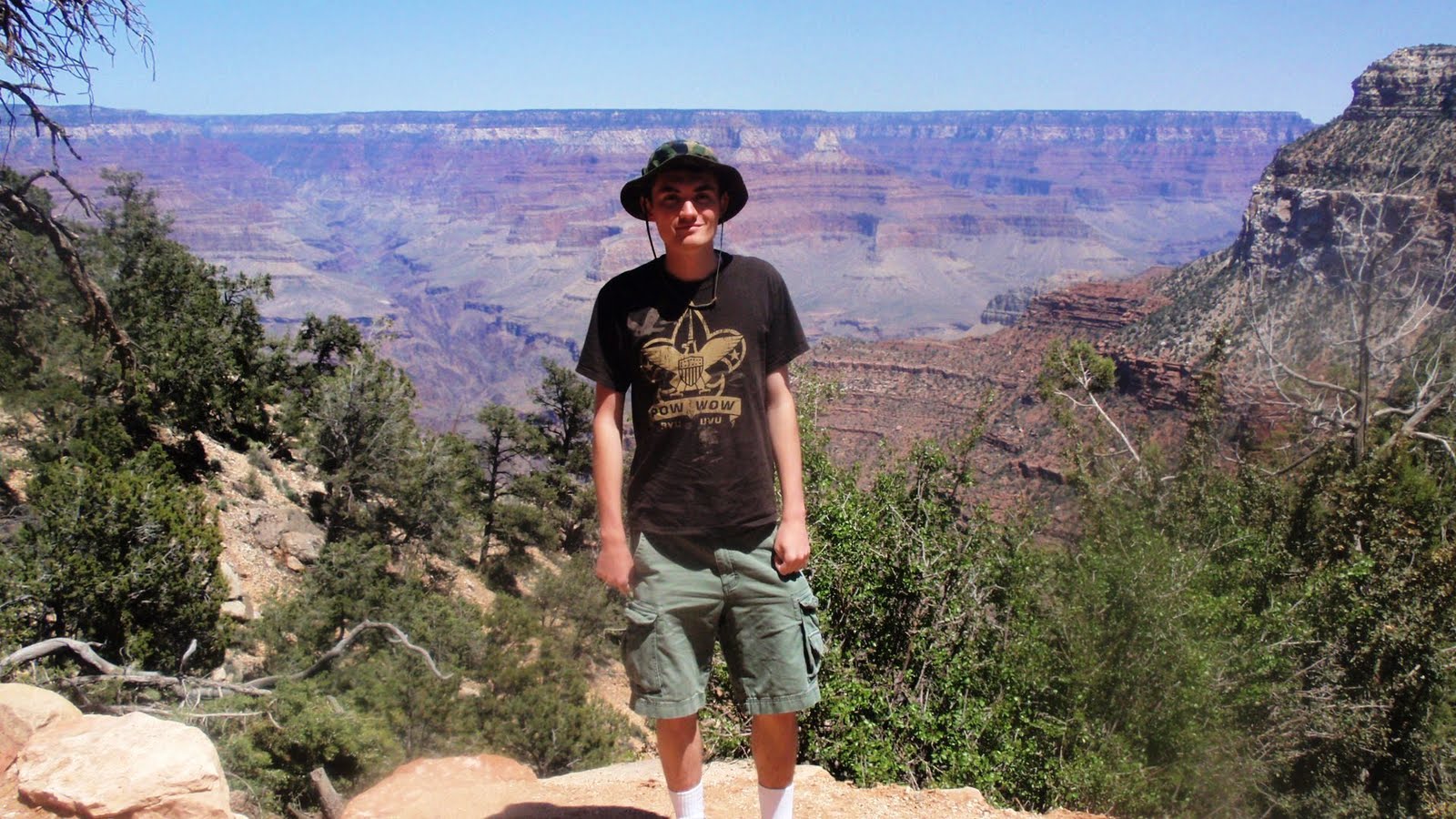
Utah/Arizona Trip - April 2010
Tuesday, April 13, 2010
Kiley's Last AYS Concert
Tuesday, April 6, 2010
Getting Up to Date
I thought I'd post a few comments concerning topics about which I've commented before:1. Music from the 60s. I continue to be amazed at the variety of old video available from the 1960s showing old rock and pop artists at the height of their popularity. A Youtube user with the moniker "nyrainbow" has uploaded a boatload of old footage from the mid-60s music program Shindig, which footage apparently only exists today as a series of kinescopes. Her "channel" is not to be missed!
2. The Gym. We are still going to Planet Fitness on Eubank Blvd. It has become a lot more popular since we first joined in October of last year, meaning one has to wait for a treadmill at times of peak demand. I'm having issues with my usual exercise routine due to the constant dizziness I've felt since our cruise in January, but I think I may be able to get by with some kind of interval training.
3. My Every Day Lunch. I now get an apple every day instead of a banana! That's the only change, however.
4. National Public Radio. I've finally grown weary of listening to NPR in the mornings. I find I have almost zero interest in anything they have to say, about virtually any topic, and consequently I've started listening to the local classic-rock station in the mornings instead. (Frankly, Ozzy Osbourne -- not to mention Ted Nugent -- is a greater voice of reason than Steve Inskeep, Renee Montagne and a thousand left-leaning NPR reporters! I've also stopped frequenting the "SuperTopo" climbers forum for the same reason: as fascinating as it can be to listen to people whose values and perspectives are completely different from my own, at some point I always conclude they're nuts, pure and simple.)
5. The Temple. I'm now almost 18 months into my two-year calling as an ordinance worker in the Albuquerque Temple. It seems almost preposterous to refer to a "two-year" calling, since most people stay on much longer than that -- and, in fact, the temple simply couldn't be staffed if that didn't happen -- but somehow I think I'll be ready to stop when I hit two years, especially if my mal de debarquement symptoms haven't abated by then. I still like going to the temple, but the notion of devoting every Wednesday afternoon and evening to it has become a little tiresome. (It's difficult to believe that the Albuquerque Temple has now been open for ten years!)
6. The Albuquerque Youth Symphony. Kiley is about to finish up her tenure in AYS -- the 2009-2010 season ends with the "Gala" concert (which features all of the orchestras in the AYS program) this Sunday evening at Popejoy Hall. It has been a good experience for Kiley, and we hope that it will inspire her to continue to develop her musical talents.
7. My Favorite Movies. I've gone back and embedded clips from Youtube for all fifty of my "favorite" movies that I first wrote about in April 2008. The list might be slightly different if I were making it today, but it's still pretty reflective of the movies I like most -- even if "R"-rated films are disturbingly over-represented.
8. Camping in New Mexico. It appears we might actually get to do some family camping this summer. Devery and Easton would like to go back to Villanueva State Park; Kristy and Chris reportedly want to so some overnight trips; and I'd like to go back to White Sands National Monument and Oliver Lee State Park. (With that many people pulling Dorine out the door, she just might agree to go!)
9. Hiking in the Sandias. I don't have very many specific hikes that I want to do in the Sandia Mountains this summer, but John Brewer and I have the goal of hiking the entire Crest Trail in one day. I can remember wanting to do that in my late 20s, although it never quite happened. I think I'm still capable of it, even at 50/51 years old -- the question is how will I feel afterwards (and whether I'll ever be able to walk again). We will almost of a necessity go from north (Placitas) to south (Tijeras), simply because the principal elevation gain occurs earlier in the hike that way, although I'd prefer to go south-to-north just for something different. I've told John that I will brook no shortcuts: we must stay on the Crest Trail the entire way.
[Photo is from the summer of 1992 -- about the time I quit being a lawyer and went to work at Sandia National Laboratories -- and shows what our family room used to look like. Check out that old IBM AT personal computer!]
Tuesday, March 30, 2010
Vertigo
It's now been about two-and-a-half months since we returned from our 25th-anniversary cruise in the Caribbean, and I have been suffering from vertigo that entire time. Treatment with antibiotics and Scopolamine transdermal patches hasn't helped noticeably, and the effects of the vertigo have been extremely debilitating (not to mention bewildering and dismaying). Rather than try to describe what I'm going through in my own words, I thought I'd use excerpts from the WebMD website:Vertigo is the feeling that you or your environment is moving when no movement occurs. Imprecisely called dizziness, the term vertigo is the specific term used to describe an illusion of movement. Unlike nonspecific lightheadedness or dizziness, vertigo has relatively few causes. ... Vertigo may...be caused by inflammation within the inner ear. This is known as labyrinthitis. This condition is characterized by the sudden onset of vertigo and may be associated with hearing loss. ... To determine if true vertigo exists, you must describe a sensation of disorientation or motion. ... The duration can be from minutes to hours and can be constant or episodic. The onset may be due to movement or change in position. ... The majority of cases of vertigo are harmless. And although vertigo can be extremely debilitating, it is easily treated with prescription medication. ... Specific types of vertigo may require additional treatment and referral: Bacterial infection of the middle ear requires antibiotics. ... The prognosis depends on the source of the vertigo. Vertigo caused by problems in the inner ear, while usually self-limited, in some cases can become completely incapacitating. The use of drugs and rehabilitation exercises are the mainstay of treatment. Most commonly this will make the symptoms completely go away or make the condition tolerable.The onset of my vertigo occurred either on the cruise or as we debarked in San Juan. I ran on a treadmill in the cruise ship's gym four times while we were passengers, but only the last time was while we were actually on the open sea. I remember struggling to keep my sense of equilibrium while the treadmill was rocking side-to-side with the ship (the irony is that that is how a treadmill on dry land has felt to me ever since we came back). It's common for cruise passengers to take some time to adjust to being back on shore, so initially I didn't think much of the fact that everything seemed to be moving. It appears now, however, that I picked up some kind of hardy bug during the cruise that has caused a long-lasting infection in my sinuses and/or inner ears. It's probably viral in nature, as a standard course of antibiotics didn't touch it. I have an appointment with an ear-nose-throat specialist in late-April (having consulted already with our primary-care doctor), but that's little comfort. I'm certain there are plenty of people with terminal illnesses who don't feel any worse than I do at this juncture!
[Update 4/1/10: What I have now seems more likely to be "mal de debarquement". It's reportedly rare for a man to get it, but everything fits, right down to the fact (a) that it isn't caused by an infection of the sinuses or the inner ear (which I really don't think I have), and (b) that neither Meclizine nor Scopolamine has any effect on it, whereas Temazepam (one of the sleep meds I use, and a benzodiazepine) seems to help somewhat. It's really dismaying to know that the symptoms of MDD can last for years, however -- I don't think I can live like this indefinitely!]
Friday, March 26, 2010
Drive-In Movie Theaters
The photo above shows the combined concession stand/projection room at the Terrace Drive-In, which was located on the south side of Central Ave. between Eubank Blvd. and Wyoming Blvd. (The Terrace had a very distinctive neon sign on the back of its screen, featuring a Flamenco dancer.) Adjacent to the Terrace was the Wyoming Drive-In, which was accessed from Wyoming Blvd. -- the structure of the old sign is still in place, at the entrance of what is now a mobile-home park. Other drive-in theaters that I remember going to when I was a kid were: (1) the Tesuque Drive-In, which was in a residential neighborhood west of Wyoming Blvd. and north of Central Ave. (a city park and community center are located there now); (2) the Duke City Drive-In, which was on Carlisle Blvd. north of Menaul Blvd. (a Wal-Mart store is located there now); and (3) the Silver Dollar Drive-In, which was on the east side of San Mateo Blvd. north of Montgomery Blvd. (There were other drive-ins in town, but they were further away and we rarely, if ever, went to them. Later on, someone had the idea to open a multi-screen drive-in, the Albuquerque 6, which was on the west frontage road of I-25 north of Montano Rd. I can remember going there as late as the mid-1980s, although eventually it, too, went under. I think it is now the location, more or less, of the Century 24 [walk-in] movie theater.)
The drive-in movie theater is a part of Americana that has, generally (and lamentably, from my point of view), gone the way of the dodo. Cable/satellite TV, combined with the advent of the VCR and DVD player -- not to mention changing public tastes with regard to video and audio fidelity -- pretty much killed it. However, I have lots of fond memories of the days when there were few things more fun to do than hop in the car and go see a movie.
[Update 4/12/10: I was just thinking about one of Cheech and Chong's old routines, called "Pedro and Man at the Drive-In." At one point, Chong [Man] is off at the snack bar, and Cheech [Pedro] starts watching the movie as the Charlie Chan character solves the murder: "Every-a-one een thees-a room have-a moteev for keeling Meesta Tayla. But Meesta Tayla only have-a one keela. And deh name of dat keela ees..." [~static~] "Ladies and gentlemen, snack bah remehn open nodder feefteen minutes -- after dat ees closed fah dee eevning." (And then, of course, the closing music plays, so we never find out who the killer was -- classic C&C!)]


[Update 10/17/12: Below is a photo from Google Earth, showing the erstwhile locations of three of the drive-in theaters mentioned above, as well as my parents' home, some of the schools I attended while growing up, and other landmarks in the area.]
Friday, March 12, 2010
My Limited Field of Vision
It feels strange not to feel much of a desire to write, when writing is one of the things I feel most comfortable doing. It's sort of like the feeling one gets when he has the urge to buy something but then realizes he's already bought everything he needs or wants, and that there is no point to spending more money. It's also like the feeling one gets when his mouth is "hungry" -- that is, he feels a desire to eat something -- but his stomach is already full. What can I write about that I haven't already discussed ad nauseum? Perhaps it's a testament to my lack of curiosity and blinkered thinking that I only seem to have four or five philosophical riffs off which I can improvise. And, even within that limited framework, I seem to repeat myself endlessly, like some mid-60s garage-rock lead guitarist playing the same two or three minor-pentatonic licks in every solo. In that light, it's probably no wonder that even my closest loved ones don't seem to care much what I think (or, fittingly, to listen to my guitar-playing).
On the subject of guitar-playing, I recently got out the old black Squier II Stratocaster that I bought in 1992, which was the only electric guitar I owned for more than ten years (and which I rarely played until I bought my first Line-6 amplifier on eBay a number of years ago). It's a cheaply made Korean model, with a body made of some kind of porous, lightweight plywood, cheesy electronics, a tremolo unit that, when used, immediately throws the instrument completely out of tune, and (now) non-functional tone controls. However, it also has the best neck of any guitar I've ever owned, and the two "out of phase" pickup settings (out of five total) actually produce very pleasing tones. In the last few years, I've given away several guitars to family members, but I've held onto the Squier II for sentimental reasons. Now that I've re-discovered it as a playing instrument, however, I place it up there with my silver MIM "Classic 60s" Fender Stratocaster and my new Epiphone Les Paul Standard -- meaning I have three very kick-A guitars!
Monday, February 22, 2010
Cabin Trip, February 2010
These photos are from our trip to Pinegrove cabin on February 19-21. We essentially invited everyone to come along, although Kiley had to stay home for a jazz festival and a cello audition. We specifically encouraged Dorine's brother Don (and his wife Margarita and daughter Rosita) to come up, inasmuch as we'd volunteered to replace the baseboard heaters in the cabin -- and Don, an electrical engineer and a knowledgeable electrician, was needed in that regard.
I had good weather and clear roads when I drove up by myself in my truck during the day on Friday, which I did so that I could pick up all the new heaters and thermostats at the Ace Hardware store in Pagosa Springs. However, by the time everyone else came up that evening, the weather and road conditions in the area had deteriorated dramatically. Nonetheless, everyone got to the cabin safely, and we were able to have some fun over the weekend -- it's always a highlight for me to go into town and get ice cream at the Malt Shoppe. Installing the heaters on Saturday took quite a bit of work, so I never really had a chance to play in the snow or take a walk with the kids along the frozen Rio Blanco. It continued to snow on Saturday and Sunday morning, so we decided to leave a little early to come home.
Most of our cars had four-wheel drive, all-wheel drive, or at least front-wheel drive; however, Heidi's Kia Sorento has two-wheel/rear-wheel drive (and she didn't have chains for it). I ended up driving it from the cabin to EspaƱola, and U.S. 84 to the state line was extremely snow-packed and icy. Despite driving 20-25 mph most of the way to the New Mexico border, I must have started sliding sideways at least a half-dozen times, especially on the sharp curve at the bottom of "Confar Hill," where we almost slid off both sides of the road (and where at least one car had gone off the road into a snow drift). Thankfully, the NMDOT had already started sanding and plowing the road, so things were better once we got back into New Mexico. (As we were approaching Chama, I finally noticed that I'd been gripping the steering wheel so tightly that several of my fingers were numb!)
I had good weather and clear roads when I drove up by myself in my truck during the day on Friday, which I did so that I could pick up all the new heaters and thermostats at the Ace Hardware store in Pagosa Springs. However, by the time everyone else came up that evening, the weather and road conditions in the area had deteriorated dramatically. Nonetheless, everyone got to the cabin safely, and we were able to have some fun over the weekend -- it's always a highlight for me to go into town and get ice cream at the Malt Shoppe. Installing the heaters on Saturday took quite a bit of work, so I never really had a chance to play in the snow or take a walk with the kids along the frozen Rio Blanco. It continued to snow on Saturday and Sunday morning, so we decided to leave a little early to come home.
Most of our cars had four-wheel drive, all-wheel drive, or at least front-wheel drive; however, Heidi's Kia Sorento has two-wheel/rear-wheel drive (and she didn't have chains for it). I ended up driving it from the cabin to EspaƱola, and U.S. 84 to the state line was extremely snow-packed and icy. Despite driving 20-25 mph most of the way to the New Mexico border, I must have started sliding sideways at least a half-dozen times, especially on the sharp curve at the bottom of "Confar Hill," where we almost slid off both sides of the road (and where at least one car had gone off the road into a snow drift). Thankfully, the NMDOT had already started sanding and plowing the road, so things were better once we got back into New Mexico. (As we were approaching Chama, I finally noticed that I'd been gripping the steering wheel so tightly that several of my fingers were numb!)
Thursday, February 11, 2010
The "U"
This photograph shows the southern part of the Sandia Mountains, circa 1930. (It comes from a postcard that was published in a recent book on the history of Albuquerque.) It is significant to me because it contains the small peak that some people now call "U Mound" (but which my family always simply called the "U"). Evidence of the white-painted "U" (for "UNM") has now all but disappeared (or has been removed) from the western face of the "mound"; however, this is how I remember it looking when I was a child, when UNM students still repainted the "U" periodically. The photo also reflects the great amount of open space that once existed on the East Mesa of Albuquerque; the bridge crossing an arroyo at the left-center of the photo is interesting in that it is evidence of an early north-south road that traversed the mesa in a location east of present-day Tramway Blvd. The city has established open-space areas in the foothills, but almost all of the land shown here has been developed now. South Sandia Peak is visible to the left.[Update 11/1/11: Here is a current-day view of the "U," taken on October 23, 2011 from the ridge to the south. Note that there's still a hint of white paint on the upper part of the west face, probably stuck to big rocks.]
[Update 4/12/12: Here is a photo, taken from my high school's 1963 yearbook, looking in a southeasterly direction from the school's practice football field. It doesn't show the "U," which was just out of the frame to the left, but it does reflect the broad expanse of undeveloped land that still existed on the East Mesa of Albuquerque in the early 1960s. (It also shows the ugly blue gym uniforms that girls had to wear -- and still had to wear, when I was a student there over a decade later -- when dressing out for PE class.)]
[Update 11/27/12: I can't resist adding another photo. This one, of members of my high school's girls' track team, comes from my senior annual published in 1977, and it reflects how the "U" looked at that point in time. (This photo was probably shot within 50 feet of where the "1963" photo above was taken; note the apartment buildings in the background.) The "U" probably hadn't been repainted in 8-10 years, but it was still very visible.]
Wednesday, February 10, 2010
Ah, Grandkids!
Kayla, now three, seems caught between wanting to play with her older cousins and her younger ones. In some ways, Maddison and Hailee (who will turn two next month) don't even look like sisters, much less twin sisters. Tyler, a very good-natured baby, looks extraordinarily like Heidi did in her baby pictures -- except there's no mistaking the fact that he has his dad's ears! Mason, who likewise has a sweet disposition (laughing and cooing much of the time), is a big kid who, at three and a half months, is already poised to overtake a very-petite Maddison in weight. They are all one of the greatest joys of my life!
Monday, February 8, 2010
Fifth Grade at McCollum Elementary
The "class photo" above is from my fifth-grade year at McCollum Elementary School, 1969-70. It obviously took some abuse at some point in time, undoubtedly from my younger sister in a fit of pique. I include my own picture -- taken sans glasses -- at the left in case anyone wonders what got scratched out.My teacher in fifth grade was Miss Fifield, who was easily the youngest teacher (~25 years old at the time) I had in elementary school. She was also sufficiently pretty that I probably would have had a crush on her but for her somewhat conceited, off-putting manner. Her younger brother John was the star basketball player at Highland HS that year (he went on to play for UNM), and I remember she taped newspaper clippings of John's exploits on the wall behind her desk. (Which was of interest to me, as my brother Jeff played for his high school team that year and was actually assigned to guard John when they played Highland.)
The people pictured are: Top (L-R): Miss (Vera) Morrow (principal), Miss (Marilyn) Fifield (teacher), Patrick Sena, Cella Dewey, Stan Esquibel, Perri Stovall, Ricky Manes, Kaye Grass. Second Row: Tammy Massoth, Gerald S_____, Yvonne Cleland, Mark Brogdon. Third Row: Roxanna Davis, Danny Fox, Elisa Banda, Jeff Kainz, Brenda Burns, Rodney Nordstrom. Fourth Row: Debra Schwardt, Patricia Serna, Trina Stewart, Scott Felder, James Snider. Fifth Row: Duane Grammer, Tonya Farson, Howie Weimer, Laura Madrid, Kevin Kartchner, Cathy Ames, Kathleen Coombs, Toni Lopez.
That year was Miss Morrow's last year as principal of the school before she retired. I look back on her now only as a person to be avoided, if possible; however, I do remember being called into her office once that year. Some kid, whom I really didn't know, had gone around our neighborhood showing hard-core pornographic Polaroids (I still wonder where he got them) to other kids, including me. He must have been caught with those photographs at school, and apparently he told Miss Morrow the names of all the persons to whom he had shown them, whether on or off school grounds. Anyway, she called me in and asked me, "Who showed you The Pictures?" I honestly didn't know what she was talking about, so I replied, "What pictures?" which she took as evasion. Once I finally realized what she was referring to, I told her everything I knew in that regard (which wasn't much) and was forced to give her a graphic description of what the photos depicted, using a ten-year-old's limited (and crude) vocabulary. A very uncomfortable experience, notwithstanding the fact that I wasn't really in trouble for anything.
Brenda Burns was one of the cutest girls in my fifth-grade class; I had had crushes on her in first and third grades, and I think she actually liked me that year (or in sixth grade -- I don't really remember), but for some reason I shied away from her. She moved from the immediate area after sixth grade, and I later found out that she attended Del Norte HS. (I remember looking, in 1981, at my friend Ken Mantlo's 1977 Del Norte yearbook and seeing Brenda's picture; I commented to Ken that I had known Brenda in elementary school, and he told me that she had been the object of the lust of just about every guy at Del Norte.) Ironically, Brenda ended up marrying a member of the LDS church -- Tom Divett, brother of Dorine's good friend Ruth Divett -- and joining the church herself, although the marriage ultimately didn't last, and I doubt Brenda stayed active in church after she remarried. (I know she and Tom lived for years in the east mountain area in fairly primitive conditions.) One of Brenda's friends in the class was Kathleen Coombs, whom I saw a few years ago at Chuck E. Cheese's on Wyoming Blvd. here in Albuquerque. I decided not to intrude by speaking to her, but there was no mistaking who she was -- she looked almost exactly the same as she did in elementary school.
A sad case was Gerald S______, who was one of a mere handful of African-Americans at the school. Gerald was a bright kid and talented, but his life went off the rails in high school, probably due to drugs and drink. I understand he served two years in the juvenile detention center at Springer for his involvement in a killing that took place at my high school in 1976. And I remember sitting in the UNM law library, sometime while I was a student at the law school in the mid-to-late 1980s, reading the New Mexico Bar Bulletin. That particular issue contained the advance opinion from Gerald's appeal from a conviction of aggravated rape (which conviction was sustained). The facts of the case were pretty disgusting, leaving me to wonder what had happened to the promising kid whom I'd known years earlier.
Finally, I remember fifth grade as the year when The Brady Bunch first aired on TV. It quickly became my favorite show, and I watched it every week.
Monday, February 1, 2010
Treading Water
Now that the holiday season and our cruise are over, I'm struggling to find things to look forward to. It doesn't help that I came home from the cruise with a case of mild-but-constant vertigo, which hasn't even started to go away, despite our being back from the Caribbean now for over two weeks. (It's making me wonder if it isn't a symptom of some underlying ailment, as I don't remember having this problem, at least for this long, the last time we cruised in 1991 -- I really need to call the doctor to schedule a physical exam.) It's making everything, especially running at the gym, a little more difficult. I seem to be developing a tolerance for Temazepam, as it isn't keeping me out all night, even with a benadryl kicker. It's clear to me now that the psychological component of my sleep disorder, which I've never fully understood, has become the crux of the whole matter; in short, I simply can't sleep while my mind is "on," meaning I have to turn it "off" chemically. I'm supposed to see a practitioner at the UNM sleep-medicine clinic later this month, just to see if she has any ideas that my other doctors haven't thought of; however, at present I can't see my way clear of using both a breathing machine and prescription sleep meds for the rest of my life. That's a depressing thought, no matter how fully resigned to it I am.What would I like to do? We'll probably be going to the cabin later this month for at least a couple of nights. I want to take my mother to Ruidoso (actually Ruidoso Downs) to see the Hubbard Museum of the American West. Dorine and I may be going to Colorado next month with the Albuquerque Youth Symphony on its spring tour of Colorado Springs and Denver. John Brewer and I have talked about doing the granddaddy of all hikes in the Sandia Mountains (after the snow melts): the entire Crest Trail (~28 miles, with loads of elevation changes) in a day. It would also be fun to visit Las Vegas after not having gone there in well over three years. Finally, I'd still like to go camping at at least a couple of state parks, something we managed not to do at all in 2009.
(The photo above was taken at Fort King George on the island of Tobago, which was my favorite of the islands we visited on our cruise.)
Wednesday, January 20, 2010
Cruising on the Bounding Main
Dorine and I have now gone on our 25th wedding-anniversary cruise in the Caribbean with my in-laws Judy and Mike P______. We had a good time -- we sailed on Celebrity Cruises' Summit cruise ship, embarking at San Juan, Puerto Rico on the evening of January 9 and spending seven nights aboard. We visited St. Maarten, Dominica (not to be confused with the Dominican Republic), Grenada, Tobago, and Barbados, ending with an entire day at sea before arriving back at San Juan on the morning of January 16. Taking a cruise provides a lot of bang for one's vacation buck. Where else can one get nice shipboard accommodations (including pampering from a cabin steward), a veranda overlooking the ocean, fine dining, top-notch live entertainment, exotic ports of call, access to pools, spas, and a gym, and shore excursions to snorkel, swim at the beach, and tour a tropical rain forest, all for about $1,000 per person (not counting airfare)? As Mike pointed out, buying all these things "a la carte" would undoubtedly cost ten times that much, which explains why Caribbean cruises are such a popular vacation get-away for middle-class folks. (Most of the more-affluent people I know probably wouldn't condescend to cruise in the Caribbean with the hoi-polloi.) As I write this, my inner ear and equilibrium are still out of whack from the movement of the ship on the sea, but that's a small price to pay to have created such great memories.[Update 5/23/12: What irony! A small price to pay? The cruise ruined my life, leaving me in a perpetual half-light of disequilibrium, physical disability, and cognitive impairment.]
Wednesday, December 23, 2009
Random Thoughts - Part 3
1. I've had to laugh at the recent revelations about the unethical scientific practices of the folks at the Climate Research Unit (CRU) at the University of East Anglia in the UK. The hacked/leaked e-mails demonstrate quite amply that the CRU and other, like-minded ideologues have reached certain conclusions about "climate change" and aren't about to let contrary evidence or heretical individuals (scientists or others) dissuade them or interfere with their political agenda. All I can say is: "Yeah -- like we didn't know that was going on!" As good an idea as renewable energy is in the abstract, carbon-based sources of energy are likely to be the only feasible alternative in the real world for some time yet. The good news is that the wind (metaphorically and otherwise) seems to be leaving the sails of those who would use carbon dioxide as a pretext for massive new energy taxes and unaccountable global governance -- as evidenced by the just-finished summit on "climate change" in Copenhagen, whence, predictably, came nothing of import except an excuse to do it again next year.2. I'm also mildly amused by the Democrats' intense push to pass a health care bill -- any health care bill -- in Barack Obama's first year in office. The idea of government-run health care is extremely unpopular in the US, so why are the Dems doing it, especially on a strict party-line vote that will probably cause them to lose seats in both houses of Congress in the 2010 mid-term elections? Well, I happen to agree with conservative pundits who say that this is the last, best chance for the Left to set in motion what will eventually morph into what they've always wanted -- a single-payer national health service and all the control and bureaucratic bloat that implies -- and they're thinking that taking a short-term electoral hit is a small price to pay to move America's political culture permanently, and terminally, to some point left of center. And Obama can take credit for something, no matter how bad the bill is, and even if neither he nor the public knows what's in it.
3. At least President Obama's administration finally decided to change tack on the situation in Honduras, apparently deciding that Mel Zelaya, the ousted Honduran president, is a nutball who only makes his supporters look stupid by association. (I can only imagine how tired of Zelaya the Brazilian embassy in Tegucigalpa is becoming; one wonders what he'll do after January -- when the newly elected president, Porfirio Lobo Sosa, will be sworn in -- and he no longer has any plausible claim on the office.) Recent elections in a few Latin American countries (Honduras, Argentina, and Chile, not to mention Colombia) have provided hope that the spread of el chavismo (i.e., populist neo-communism) has been stemmed in Latin America.
4. In my Sunday School lesson a couple of weeks ago, I discussed Doctrine and Covenants Section 134, which is a declaration of Mormon beliefs (dating to the Kirtland, Ohio era in 1835) on the topic of governments and laws. I found Verse 12 to be particularly intriguing:
When I first read this verse, I thought, "Well, that wasn't a very enlightened position to take on the institution of slavery, even in 1835." However, owning a copy of the Ken Burns film The Civil War and having watched it several times, I realize what the Civil War cost, in both blood and treasure, to keep the Union together while ridding it of slavery. I also know that legalized slavery in the United States could not have lasted another generation, as more and more light was cast upon it and its inherent evil became progressively apparent to all. Therefore, in hindsight the Civil War was fought, essentially, to cause abolition to occur a few decades earlier than it inevitably would have done otherwise. (I consider it instructive that slavery ended bloodlessly in Brazil in the 1880s.) It's often said that the war was the penance this country had to do for the "original sin" of slavery (and even that wasn't enough if you buy into the idea of reparations for descendants of slaves), but it's occurred to me to wonder just how necessary the war really was, and whether the church's statement on slavery in 1835 wasn't quite as benighted as it seems at first blush now.We believe it just to preach the gospel to the nations of the earth, and warn the righteous to save themselves from the corruption of the world; but we do not believe it right to interfere with bond-servants, neither preach the gospel to, nor baptize them contrary to the will and wish of their masters, nor to meddle with or influence them in the least to cause them to be dissatisfied with their situations in this life, thereby jeopardizing the lives of men; such interference we believe to be unlawful and unjust, and dangerous to the peace of every government allowing human beings to be held in servitude.
5. Dorine and I have now been married for 25 years, which is a genuine milestone for a couple. However, I tend to look at next August as an even bigger milestone in my life, when we will have been married for as long as I was old when we got married. (The exact date will be July 31, 2010 if you go by the number of years [25], months [7] and days [13] of my age on our wedding day, or August 3, 2010 if you simply go by the number of days [9,359].) The passage of time is a funny thing, not that I'd care to slow it down or replay it.
6. Given my prolific journal-keeping, I've begun to wonder just what will come of the dozens of journals I've filled since I first started keeping a diary back in 1973. An awful lot of me is contained in those voluminous writings, and one would be able to come to know me pretty well, warts and all, by reading them after I've shuffled off this mortal coil. The question is just who, exactly, would care to come to know me enough to plow through my journals. Assuming they survive me, will they end up someday in a box in the back room of some university library, waiting for some researcher or historian to decide they are representative of, say, an American "anti-social" Mormon in the latter part of the 20th Century and the first part of the 21st? Or, will one of my descendants transcribe, edit, and publish them? Or, simply, will no one care what I thought and felt? It's difficult for me to guess....
Subscribe to:
Posts (Atom)