Well, the U.S. lost to Ghana today in the "round of sixteen" of the World Cup finals, which is disappointing, especially after the heroic efforts the team put forth to make it out of the group stage. In truth, the U.S. simply isn't among the elite soccer nations, nor is it poised to enter their ranks. That's probably puzzling to a lot of the world, given our population of some 300 million people, but our talent pool is overwhelmingly diluted by other sports that appeal much more to most Americans (basketball, American football, baseball, boxing, track and field, etc.). That said, the U.S. did better in the tournament than a number of inarguably "elite" soccer nations -- France and Italy being chief among them -- and it won its group over England after tying with the Brits head-to-head and scoring more goals in the three group-stage games. (The two-goal comeback against Slovenia, and Landon Donovan's electrifying winner against Algeria in stoppage time, will be the stuff of American soccer legend.)
Here are a few observations on the tournament in general:
1. The refereeing, as usual, has left a lot to be desired -- the U.S. had to overcome two very bad calls that cost them goals, and several other nations (e.g., Chile, against Spain) received questionable "red cards" (leaving them down one player) that severely impacted the outcome of key games. Just why FIFA, the international governing body of soccer, continues to ascribe to the "multi-culti" school of thought concerning the use of relatively untested referees from third-world countries in the World Cup finals is beyond me.
2. The U.S. suffered greatly this year from the traditional flaws of past U.S. World Cup teams: an inability to finish prime goal-scoring chances, an inability to maintain possession in the midfield, a strong tendency to "go for the home run" on deep balls down the middle instead of building the attack on the wings, and a ball-watching back line that conceded early goals in three of the U.S.'s four games (and nearly did so in the other one). All of these shortcomings were on display today against Ghana, whose two goals came after (a) a bad give-away in the midfield five minutes into the game, and (b) an even worse "skinning," in extra time, of the central defense.
3. I think it's telling that all five South American teams in the tournament (Brazil, Argentina, Chile, Paraguay, and Uruguay) made it out of the group stage and looked strong doing so. Spain may still be the top-rated team in the world (and Germany and the Netherlands have played well), but I expect a team from South America to win the World Cup.
4. As much as I like soccer, I can fully understand why a lot of Americans don't care for it. There's something about a sport characterized by the following that offends American sensibilities. One, that scoring seems to depend at least as much on the Fates (not to mention the referees) as on individual skill, team play, and execution. Two, that esoteric rules, such as the "offside" law -- the origins of which lie in outdated notions of "fair play," but which seems to be called erroneously, even by the world's top referees, at least as often as it is called correctly -- have a tremendous effect on the game. Three, that obvious time-wasting tactics, not to mention "diving" in an attempt to fool the referee into calling a foul, are not punished to any appreciable degree (see the reference above to "fair play"). And, four, that one lucky score in 90 minutes of play can determine the outcome of the game. (Americans like to root for underdogs, but we also like to see the dominant team win -- at least when our national side isn't playing -- which often isn't the case in soccer.)
What is the future of American (men's) soccer? The U.S. side has now qualified for six consecutive World Cup finals, as it benefits greatly from being located in a region consisting of North America, Central America, and the Caribbean; however, there's no telling when it will be ready to advance into the semifinals or championship of the World Cup. The current generation of players will probably not be up to the task, and Major League Soccer, the American professional league, isn't nearly on par with the top European leagues. We'll probably know America is close when it wins a U-17 or U-20 World Cup.
[Update 6/27/10: The games today, Germany vs. England and Argentina vs. Mexico, highlighted one more reason why Americans might rightfully dislike soccer: the lack of video replay to review questionable calls, or non-calls, that determine (a) whether goals are allowed or disallowed, and (b) whether penalty kicks are awarded. Considering that the laws of the sport evolved on the quaint notion of "fair play," what could be more fair than to verify the correctness of calls on which the result of a game hinges? There's simply no question that video review today would have resulted in (a) Argentina's first goal against Mexico being disallowed for an obvious offside infraction, and (b) England's being given its clear (to everyone in the world except the assistant referee) equalizing goal in the first half against Germany. One can argue that the margin of victory in each of these games made the bad non-calls moot, but it is a soccer truism that the score dictates tactics, and no one can say what might have happened if the refs hadn't screwed up. My prediction: FIFA will find itself obligated to institute video replay -- despite its being an American (ptui!) innovation, and at least at the goal line -- by the 2014 World Cup finals. "Fair play" is practically screaming for it!]
[Update 7/6/10: Okay, so I was wrong about a South American side winning the Cup; in fact, the only South American country to make it to the semi-final round, Uruguay, was the fifth-place team in the CONMEBOL region. Boy, did Brazil and Argentina crap out!]
[Update 7/13/10: Spain has defeated the Netherlands for the World Cup Championship, capping off a series of clinical, efficient (but pretty boring) 1-0 wins in the four "knock-out" stages of the tournament. Again, the refereeing became a cause for criticism and had a noticeable impact on the game. FIFA will probably keep pretending that its referees aren't a factor in the outcome of games with world-wide import -- shoot, some commentators have gone so far as to imply that blown calls are characteristic of soccer and part of its beauty as a sport -- but I think most people, not just Americans, will agree that the best-refereed game in any sport is one in which the referees are barely noticed. I'll grant that soccer, especially as played at elite levels, is particularly susceptible to game-changing intrusions by refereeing crews, but a lot of that is due to tolerance of a whole host of player shenanigans, from clutching, grabbing, gouging, punching, and kicking to diving and faking injuries. (Virtually all set pieces in this tournament made the penalty area look like a groping party; once a referee lets a hundred fouls go by, how is it possible to call one without seeming arbitrary and capricious?) Something must be done to clean up the sport -- even if it involves stopping the game several times each half for video review -- or else FIFA risks losing audience. Oh, and one more thing: I agree with American commentators that an intentional handball on the goal line to prevent what was otherwise certain to be a goal -- as happened at the end of the Uruguay-Ghana game -- should simply be counted as a goal, and should not result merely in an expulsion and a too-easily-missed penalty kick.]
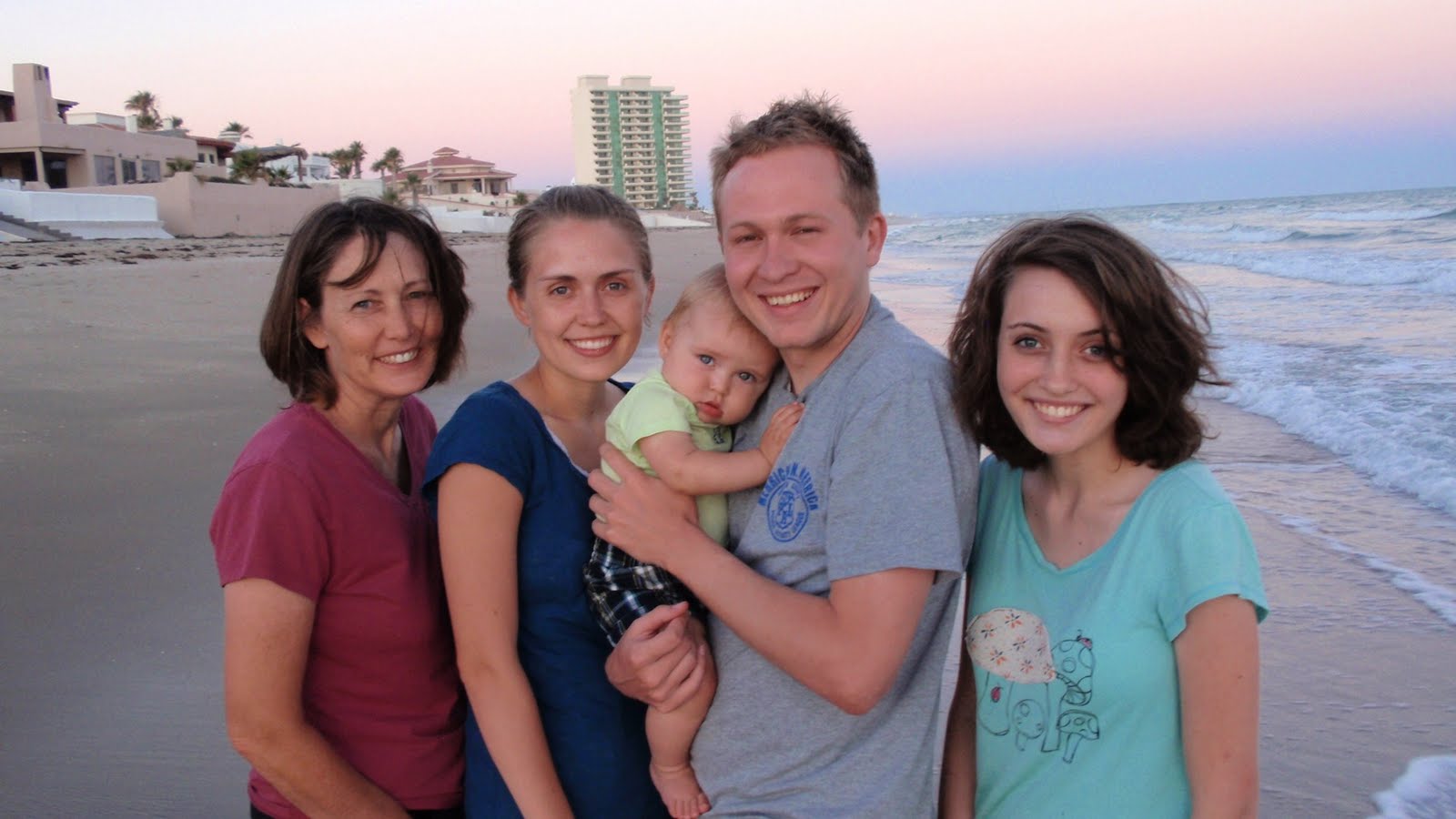
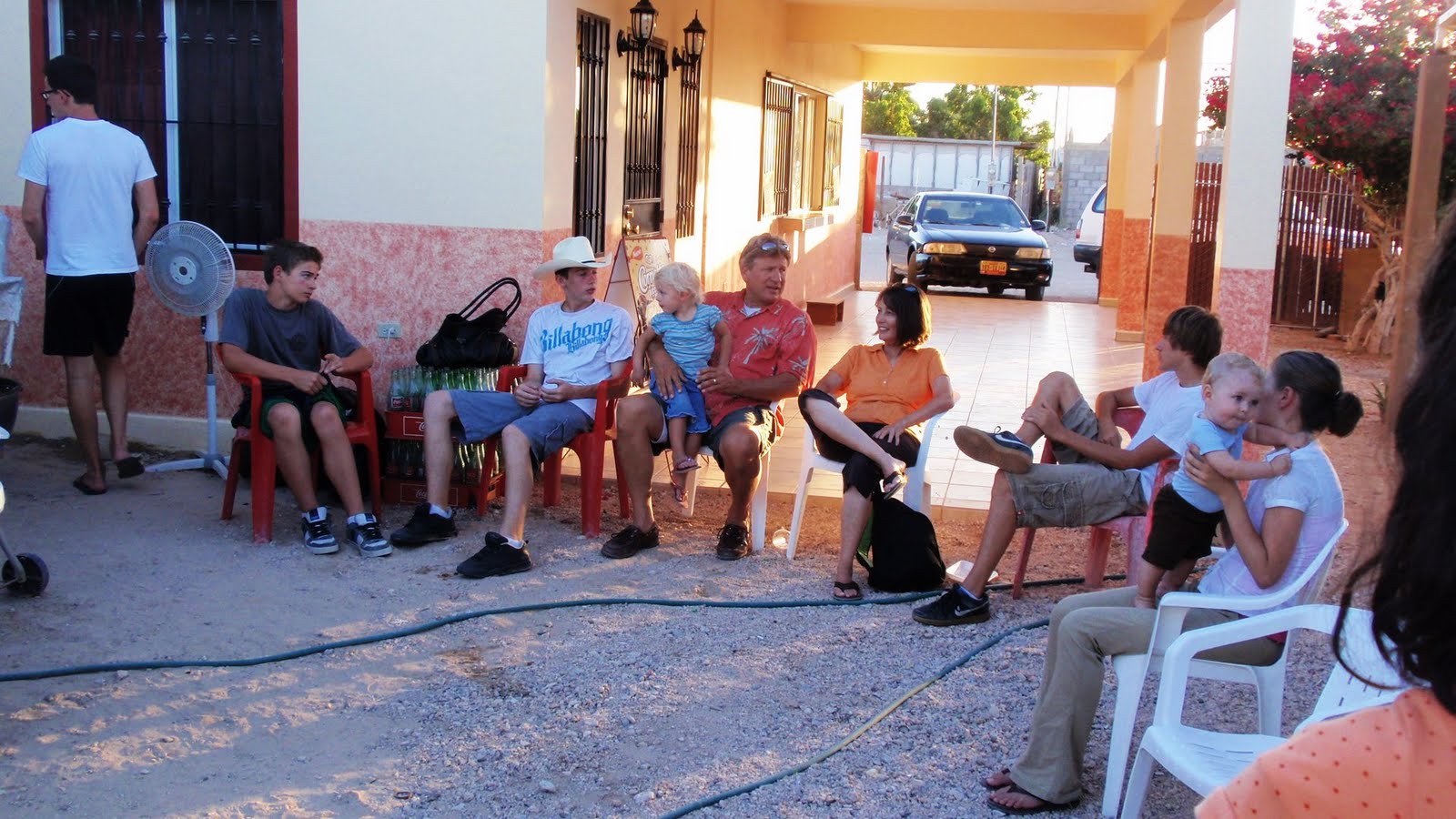
These photos are from our trip to Puerto Peñasco, Sonora, Mexico; we left Albuquerque on the evening of Tuesday the 15th, spending the night in Tucson and driving on to Puerto Peñasco the following morning, and we drove back to Albuquerque yesterday, Sunday the 20th. We stayed in the Las Conchas district in "Casa Alhaja," a beachfront home of which Easton's parents, Steve and Jeannie H______, are part owners. This trip was a striking contrast to our last (and my only previous) trip to Puerto Peñasco in 1991, when Dorine's extended family camped on the beach at Choya Bay in tents, with no shower access and only one small port-a-potty to service ~20 people. "Casa Alhaja," on the other hand, has numerous bedrooms and five bathrooms (all with showers), while still having immediate access to the beach. Here's a partial run-down of the things we enjoyed doing while in Mexico: (1) swam and body-surfed; (2) rode ATVs; (3) rowed a boat out into the waves; (4) played volleyball and tossed around a football and a Frisbee; (4) foraged around in tide pools; (5) shopped (both for food and for souvenirs); (6) went out to eat a couple of times; (7) watched World Cup soccer games and Game 7 of the NBA finals (all online); (8) played "dos huevos" (a tossing game using two golf balls on a string); (9) took long walks on the beach; and (10) went and had a huge asado at the home of the Palmas family, a family of LDS church members whom the H______s befriended years ago (and whom they helped out over time by providing them with large quantities of second-hand building materials). I was in my usual crap physical condition, but at least I was able, largely, to ignore it for several days.
Dorine and I spent two nights camping at New Mexico's Villanueva State Park with family members. Both Devery and Easton and Kristy and Chris wanted to go camping with us, but Devery and Easton could only go on Friday night, whereas Kristy and Chris could only go on Saturday night. In essence it was like two camping trips in one, which was probably the only way I'd ever be able to get two nights out of a family camping trip. Dorine and I drove out to Villanueva in mid-afternoon on Friday, the 11th, in hopes that we could find an open campsite on the (Pecos) river; however, there seemed to be quite a few "parties" going on in the lower level of the park, and everything was full-up (and then some). Nonetheless, the upper ("El Cerro") campground had several open sites and in fact didn't ever fill up while we were there; given all the people in the park, and despite the steep path/road up the hill, I preferred to stay up there. We got what I now consider to be the best campsite in the upper campground, which has a great view on three sides (see the long-distance photo above of our campsite, looking east from one of the trails in the park), lots of space, and is relatively secluded.
So Devery, Easton, and Mason drove up later that evening, and we spent that night and much of the next day with them. I'd taken a couple of inner-tubes up without really knowing if we'd want to float on the river, but Devery and Easton were up for it, so I pumped up the tubes, and we floated several times from the park entrance down beyond all of the campsites. It turned out to be the most-fun thing we did during our stay at Villanueva, so I'll be certain to take inner-tubes on all future trips there. I also had a lot of fun playing with Mason, who's growing up fast and showing a lot of interest in what's going on around him.
Devery and Easton left in the early afternoon on Saturday, and Dorine and I had a few hours by ourselves before Kristy and Chris came up. (I took advantage of the "lull" and went and took a much-needed shower.) It turned out that Zach couldn't come because of a Little League all-stars practice that he needed to attend, but all the other kids came and were all a lot of fun to be with. I helped Chris put up their new tent (which, having sturdy poles, was much better-suited to the big winds we had for much of the time) while everyone else went down to the river and the playground. I slept poorly both nights, as sedation alone, without a breathing machine, no longer seems to put me out entirely; however, I felt well enough during the day to do a lot of things. (I'd say I'm encouraged, but I don't feel any less dizzy, discombobulated, and debilitated than I have felt since our cruise in January.)
On Sunday morning, Nicole and I tubed down the river a couple of times (Alexis went on the first run but insisted on being let off near the bridge half-way through). Then we packed up and came home. I had agreed to give a sacrament-meeting talk in Spanish in the Valle Vista Branch, which meets in our church building (having sacrament meeting at 2:15 pm), so I had to get home to shave, bathe, and make final preparations. I'd spent hours and hours preparing my talk, which consisted of about 20 minutes of material; however, I was the last of three speakers on the program, and as is often the case, the other speakers left me very little time. Thus I was only able to give about 25% of the talk I'd prepared, which made it seem entirely anticlimactic, relieved though I was to be done with it.
[Update 10/19/10: I found this photo of Villanueva, which I'd taken on an earlier trip there from the trail that traverses the cliff on the east side of the river. It gives a good idea of the park layout, and you can pick out our campsite from this year's trip, which is marked by the shelter on the upper left that sits off by itself.]
One of the things I used to enjoy doing most as a child was playing miniature golf, especially at the Putt-Putt facility that once was located on Lomas Blvd. directly southwest of I-40 (i.e., just as Lomas crosses over the freeway). I even had my own putter, and I tried to create my own miniature-golf courses in our back yard and even inside our house. (I wonder now how my mother could stand my banging golf balls incessantly off her baseboards.) I remember that Mom paid for me to have a birthday party once at Putt-Putt; my memory is a little hazy, but I think it was my 9th birthday in May 1968. (I invited several kids from my third-grade class at school, including Brenda Burns -- see my earlier post about my fifth-grade year.) During the summers, I often went to "Dollar Day" on Mondays at Putt-Putt, which got you all-day access and a can of soda. (I also used to like to watch the PPA [Professional Putters Association] broadcasts on TV on Sunday afternoons; I think the PPA still exists in some form and may even be shown on TV on some obscure channel, although the mere notion of a person getting paid for playing miniature golf these days seems absurd.)
There was another miniature-golf facility further west on Lomas called "Twin-Putt," which I think was originally called "Putt-Putt," at least until the owner either lost his franchise or was forced to change the name due to trademark infringement. I never really liked Twin-Putt, however, as it seemed antiquated, ragged, and somber compared to the brighter atmosphere of Putt-Putt. As it turned out, both the original Putt-Putt and Twin-Putt closed down, and the respective parcels of land became part of automobile dealerships (the Twin-Putt property now consists of an extremely large, unoccupied metal pavilion). Another Putt-Putt eventually opened on Lomas northeast of I-40, this one with an arcade (a hit in the days of Donkey Kong and Pac-Man), but it too finally closed sometime, I think, in the late 1980s. There apparently still is a "Putt-Putt Golf and Games" in Albuquerque, on north San Mateo Blvd. -- the only other miniature-golf facility in town that I'm aware of is the Hinkle Family Fun Center, which is fairly close to our house and is located on the corner of Tramway Blvd. and Indian School Rd. However, miniature golf doesn't hold the same fascination for me as it once did, and so I can't really even remember the last time I did it.
I used to like quite a few different salsas with tortilla chips, especially the ubiquitous Pace's Picante Sauce. However, at one point Costco started selling a Garduño’s brand salsa that simply spoiled me for all the brands that I'd previously eaten: not only was it extremely hot, but it tasted like chile and not like tomatoes. Unfortunately, Costco stopped selling the Garduño’s salsa only a couple of months after it started, leaving me feeling deprived and unhappy. I tried all sorts of other brands -- Sadie's, El Pinto, 505 -- but all of them tasted like tomatoes and simply didn't have that chile zing to them.
Finally, I picked up a specialty brand of salsa, Pedro's, at Wal-Mart; lo and behold, it had the same magic qualities that the Garduño’s brand had had. Pedro's salsa is expensive (almost $4.00 for a 16 oz. jar [roughly three servings for me], even at Wal-Mart), but I find myself splurging once in a while just to get my chile fix. Pedro's is a local concern, owned by Pedro and Kathy Ruiz (see picture); its website is found at http://www.pedros-salsas.com/index.html.
This photo was taken on Tuesday, May 25, at Pinegrove cabin. I drove up with Darren and Kiley on Sunday afternoon and spent three nights there with them. (Kristy and Chris, whose week it was, spent the weekend at the cabin but had to go home on Sunday evening -- we ran into them in Chama as they were heading home.)
We didn't do a whole lot while we were at the cabin. Monday was a cold day, feeling more like late March than late May. We drove up to the summit of Wolf Creek Pass, and then back down to the "scenic overlook" and Treasure Falls, but we only barely got out of the car due to the chill. We drove back into Pagosa Springs and did some shopping and had lunch at the Malt Shoppe, and then we decided to brave the cold and try tubing in the river. As was the case a couple of summers ago, the "Rito Blanco," the tributary of the Rio Blanco that joins the latter right there at the cabin property, was running high and afforded a fairly wild ride (we lashed three tubes together and rode as a trio) -- especially with a few newly fallen tree branches that got in the way. I was pretty blue (actually red) with cold by the time we finished a second ride that day and was happy to go take a hot shower.
On Tuesday, we drove back into town and did a few things. We bought river shoes for Kiley and then went to the candy shop underneath the theater to buy fudge and some other goodies. Then we walked along the San Juan for a while before going back to the Malt Shoppe for soft-serve ice cream cones. Finally, we returned to the cabin, and, since the weather was at least ten degrees warmer than the previous day, the river sounded a little more appealing. We did the "Rito" twice more, together, before untying the tubes, at which point Darren and Kiley rode twice on the "Rio" from the bridge around to our usual getting-out point.
For entertainment, we watched a few movies, played Monopoly Deal (a card game at which I suck, pure and simple), and surfed the Internet and checked e-mail messages on my laptop. (The neighbors across the road keep their satellite wireless network "open," apparently so that people at our cabin can log on to it. Awfully nice of them!) Darren and Kiley also put together a couple of jigsaw puzzles, something for which I've come to have little patience. There was a lot of traffic up and down the road, causing me to conclude there must be some construction going on somewhere down at the end of the road.
Finally, we came back fairly early today so that I could get back in time for my temple shift. It would have been nice to stay longer, but at least I'll have another four-day weekend for Memorial Day.
Kiley, our youngest child, has now graduated from high school; the attached picture shows all five of our children (L-R: Heidi, Devery, Kiley, Kristy, and Darren) outside Tingley Coliseum (on the New Mexico State Fairgrounds) after the commencement exercises yesterday, May 21. Kiley's graduation marks the end of a 14-year string of our having at least one kid enrolled at ______ High School, as well as a 26-year string of having at least one child enrolled in the Albuquerque Public Schools. It's been a heckuva run!
Kiley won the school music award in the senior awards assembly on Thursday, as she was one of the top cellists this year in the Albuquerque Youth Symphony and she won an award as the outstanding bass player in the Albuquerque Jazz Festival, in which her school jazz band participated. (The electric bass was definitely Kiley's second instrument, although, with all her cello training -- especially her use of all four fingers on her left hand -- she looked like a pro bassist on stage.) Kiley will be attending the University of New Mexico this fall on a music scholarship.
Today is my 51st birthday, and I'd like to be able to say it's a happy occasion for me. It's ironic, however, that whereas I said last year that I felt much older at 50 than I did at 40, now I feel like I've aged an additional twenty years just in the last three-and-a-half months! (I have the lower back, joints, strength, stamina, senses, crotchety disposition, and [probably] life expectancy of a 71-year-old.) Not only am I still trying to deal with a sleep disorder that can only be treated with one or another prescription sedative (which I have to take with an over-the-counter antihistamine to obtain sufficient "knockout" strength) and the use of an expensive "PAP" machine, but now I'm dealing with the lingering, extremely debilitating effects of mal de debarquement, which I acquired as the result of trying to show Dorine a good time in the Caribbean for our 25th wedding anniversary. (I think I could be excused for concluding that no good deed ever goes unpunished!) I've also been fighting the sort of feeling of foreboding that only a person who senses his life going downhill can truly appreciate.
I've been drawing a lot of comparisons in my mind lately between serving a church mission and dying. When I went on my mission, was I as prepared for it as I could have been? No. Was I as prepared for it as I needed to be? Debatable. Was I as prepared for it as I ever would be? Absolutely! One reason I had difficulty finding motivation to serve a mission had to do with the "mission prep" priesthood-meeting class we had in the BYU 65th Branch during my freshman year, 1977-78, which was taught by people (including one son of a general authority) whom I regarded as extroverted narcissists. They seemed to believe that there was only one personality type (hard-driving and hard-selling) that could possibly be of any use to a missionary, and that anyone else would be wasting his time in the mission field. It wasn't until my stake president at home in Albuquerque, Jay Payne (who, after I'd been on my mission for only four or five months, died suddenly of a heart attack while jogging one morning), assured me that the Lord needed all kinds of personalities in the mission field, and that I could be an effective missionary without trying to change mine, that I began in earnest to prepare. It's difficult to say how good a missionary I really was -- I did a few things that I later regretted, and I certainly wasn't the hardest worker, by any means, in my mission. However, I had my share of unique struggles -- particularly with my health, as I suffered from low-grade nausea for virtually the entire time I was in Chile. I never stopped trying, and I never stopped working, even if I often wasn't as effective as I might have been had I felt better (and if other circumstances -- certain companions, certain areas, my first mission president -- had been different).
The analogy of a mission to death seems obvious. Per Mormon doctrine, am I as prepared to die, at this juncture of my life, as I could be? No. Am I as prepared to die as I need to be to reach the Celestial Kingdom? Debatable (highly so). Am I as prepared to die as I ever will be? Well, that's the question that's been weighing on my mind for some time. What I struggle with most is the disconnect between (a) the notion that our eternal reward will hinge on what we did with what we had (i.e., that a person's individual circumstances -- his talents, upbringing, DNA [now there's a topic you'll never hear discussed in General Conference!], overall experiences, and sacrifices made relative to resources [whether financial, emotional, physical, or spiritual] -- will be taken into account in the Final Judgement), and (b) the take-away from practically all church meetings, which is that there is some objective (if intangible and unknowable) threshold of personal righteousness or individual perfection -- which applies to all people regardless of circumstance -- that one must achieve before having any hope that the Atonement of Christ will fill in the gaps, as it were, of his personal failings and weaknesses as concerns reaching the Celestial Kingdom. I have church leaders now who seem to believe -- reminiscent of my priesthood instructors all those years ago at BYU -- that one must be some kind of Stepford Mormon and that anyone else (e.g., someone with a sense of humor or who purposely doesn't conform in order to maintain some kind of individuality or to avoid being saddled with what are, for him, intolerable burdens or responsibilities) is wasting his time. I hear church members suggest from time to time that there will be all kinds of people in the Celestial Kingdom, but, since that message never, ever comes from the leadership, I tend not to take it to heart.
So what kind of person have I been? I certainly haven't been precisely the kind of husband, father, friend, breadwinner, and priesthood holder that I could have been. I've done things that I've regretted, and likewise I've failed to do things that I wish I'd done. However, as was the case with my mission, my life in general has posed its own peculiar set of struggles -- my health issues becoming increasingly prominent among them -- and it is true that I've never given up or stopped trying. It's sometimes annoying to realize just how many people in my life seem to regard me as (to borrow a phrase from the movie Little Big Man) a "perfect reverse barometer" -- which I define, in my case, as someone whom others use to feel good about themselves by comparison -- but I've never let that completely discourage me or cause me to hate anyone. I'm not as good a person as I could be, or could have been under other life circumstances, and, again, the question is how much my circumstances will be taken into account (assuming there truly is a Hereafter). If my testimony has taken a battering over time, it is due to the implicit, unrelenting message from the pulpit that individual circumstances are immaterial and that one must be objectively as righteous as Brother X or Sister Y to have any hope of attaining exaltation. I can't be like Brother X or Sister Y (assuming they themselves aren't, after all, whited sepulchres), and I don't want to be, so I continually question whether or not my efforts as a church member are a waste of time.
The 2010 (men's soccer) World Cup will be played in South Africa in the latter half of June and the first half of July. I, of course, will be rooting for the United States, although how they'll perform in the tournament is a real question mark. In last year's Confederations Cup tournament, the U.S., which had a lackluster preliminary round (but then squeaked into the "knockout" stage by beating Egypt 3-0, the precise margin of victory it had to have in order to advance), defeated Spain, the #1 rated team in the world, 2-0, and then led Brazil, favored by many to win the World Cup this year, by two goals in the championship before conceding three in the second half, proving that it can do some damage when the ball falls the right way. It's too much to expect our guys to win four successive "knockout" round games at the World Cup, but it will be a major disappointment if they don't make it out of the group qualifying stage, especially with the draw they got (England, Slovenia, and Algeria).
However, the U.S. is still facing an uphill battle. One, we have a pretty limited pool of top-notch talent, and key injuries (especially to Charlie Davies, our fastest forward, and Oguchi Onyewu, our best central defender in a back line that has not otherwise distinguished itself in qualifying) have not helped. It's hard to say we have any world-class players; we have several who are capable of world-class play, especially Tim Howard (goalkeeper whose heroics in net can, and all too often must, compensate for the deficiencies of his back line), Clint Dempsey (see photo above -- search on Youtube for his brilliant goals this season for his EPL club team Fulham against Stoke City and Juventus, not to mention the opener against Brazil last year), and Landon Donovan (who, although he has a history of blending into the landscape against the better sides, has made some great goals lately, especially the second goal against Brazil last year, which came at the end of what was about the closest thing to a perfectly executed two-on-two "fast break" that you'll ever see in a soccer game at any level of play), but all of them will have to come up big merely for the U.S. to make it out of group play. Two, whereas the team's coach, the home-grown Bob Bradley, did succeed in getting the Americans to qualify in first place in the CONCACAF region, it's easy to wonder sometimes if he really knows what he's doing, especially when his players look lost and uncomfortable in their assigned positions, which happens dismayingly often. And three, the U.S. plays England, the top-rated team in its group, in the first game, and if it doesn't secure a result (win or tie) in that game, it will feel all the more pressure to play well against Slovenia and Algeria, which are fairly unknown quantities. Still, there are lots of countries who'd like to be in the U.S.'s shoes but instead are staying home, so we'll see how things play out.
I was never particularly good at volleyball, except within the context of the stake men's league we used to have at church. However, I have always liked to watch good volleyball being played, so it interests me whenever rule changes are implemented. Four significant rule changes that have occurred since I played are (1) the "legalization" of the two-hand "soft dig" (or "beach dig," as we used to call it), which was always called a double-contact in the old days, (2) a serve's being called "in" that hits the top of the net and falls over into the opponent's side of the court; (3) the ability to serve from anywhere on the back line; and (4) the creation of the "libero" position (a back-row player, a sort of "designated" digger or serve-receiver, who can be inserted at multiple positions in his team's rotation). Two additional changes in strategy, which did not entail major rule changes but have changed the game greatly, are (1) the jump serve (which in turn has placed a premium on passing skills); and (2) widespread use of the "5-1" system, where one setter sets from all six positions in the rotation (which in turn requires one attacker from the back row when the setter is playing in the front row).
However, the rule change that, in my view, has had the biggest impact -- an extremely negative impact -- is the implementation of so-called "rally" scoring, where every serve produces a point. (In the old days, only the serving team could win a point -- the other team played to win the serve.) I guess the rationale was to speed up the game, which it definitely has done, despite the fact that it now it takes 25 or 30 points to win a game instead of 15. However, it also makes it extremely difficult for a team to come back from any significant deficit, because the team that's ahead only has to keep "siding out" to win the game. Also, given that it's generally much easier to win a point when receiving serve than when serving, "rally" scoring tends to punish a team that has won a point by making it serve the next point. The logic seems backward to me: if the rule-makers really want to speed up the game, why not make a team serve until it wins a point, then make the other team serve until it wins a point, and so forth? It is for these reasons that "rally" scoring has practically ruined volleyball in my opinion.
I've been doing a lot of thinking about the topic of pornography lately, especially as general and local church authorities have made repeated references to it, which in turn suggests that it is a bigger problem in the church than the membership at large can guess. I've wondered how I can address my feelings on this topic without appearing to defend pornography and those who indulge in it; therefore, let me say first that I do indeed believe that pornography, in all its forms, is evil and a thing to be avoided by persons who aspire to live the Gospel of Jesus Christ.
However, I've concluded that a man's use of pornography, and the "self abuse" that almost necessarily results therefrom, can be (and probably most often is) a greater sign of a defect in the fabric holding his marriage together than a defect in his character per se -- the latter being the message that usually comes across in church discourses on the subject. This is a crucial distinction, because once one accepts that the true weakness is in the marital bond, not in the man, it becomes clear that responsibility for the use of pornography extends beyond a man's capacity for self-mastery.
To illustrate the point, let me cite two general authorities from two different eras of church history. The first is Heber C. Kimball, who was an apostle and a member of the First Presidency serving under Brigham Young in the mid-19th Century. To give context to this statement, remember that it was made during a time when the Church was (a) practicing plural marriage, and (b) having to defend the practice against a litany of attacks from both outside and inside the Church. Quoth Elder Kimball:
I have noticed that a man who has but one wife, and is inclined to that doctrine, soon begins to wither and dry up, while a man who goes into plurality looks fresh, young and sprightly. Why is this? Because God loves that man, and because he honors his word. Some of you may not believe this, but I not only believe it but I also know it. For a man to be confined to one woman is small business. ... I do not know what we should do if we had only one wife apiece. (Deseret News, April 22, 1857.*)
* I can't vouch for the primary source of the citation, as the quote comes from an independent website, but it jibes with similar sentiments published at around the same time.
I don't know how much to read into Elder Kimball's remarks -- I'm certainly no big proponent of polygamy -- although it is clear that church leaders of the time considered monogamy to be both an unnatural social construct and the source of impulses leading to adultery, prostitution, and the spread of disease (cf. Journal of Discourses, particularly Volumes 4 and 13). One thing that Elder Kimball does appear to be saying, however, is that having regular physical relations with his wife (or wives) is good for a man's constitution.
The second quote is from Elder Boyd K. Packer, the current president of the Quorum of the Twelve:
It was necessary that this power of [procreation] have at least two dimensions. One, it must be strong, and two, it must be more or less constant. This power must be strong. Except for the compelling persuasion of these feelings, men would be reluctant to accept the responsibility of sustaining a home and a family. This power must be constant, too, for it becomes a binding tie in family life. (Young Women Manual 2, lesson titled "The Sacred Power of Procreation.")
Elder Packer seems to be saying that without regular expression of these "strong" and "more or less constant" feelings, men perforce have almost no inclination toward marriage. Let's put it in plain words: absent sex on a regular basis, men find marriage less appealing and, in general, feel less strongly bound to their wives and more attracted to other women. Considering Elder Kimball's words with Elder Packer's, one is led to the conclusion that it is not only possible for a married man to be sex-starved, but for that state to be healthy neither for him individually nor for the marriage in general. Why should it be any great surprise, then, for a man, even a Melchizedek priesthood holder, who feels thus starved, to say to himself, "Heck, I didn't get married to be celibate!" and to seek another outlet (one that, for the most part, falls short of divorce and remarriage to some equally sex-starved, perhaps younger woman)?
Again, I don't say this to defend pornography or those who use it (especially those who truly do become obsessed with it or addicted to it, and/or who allow it to distort or pervert their view of -- and particularly their actions toward -- the opposite sex). But it would be nice if someone in a position of authority in the church stated the obvious: (1) that a lack of marital intimacy (whether relative or complete) is a large, and perhaps the largest, contributing factor in setting married men on the pornography path; and (2) that there is a simple fix in many, if not most cases. However, that would suggest that wives bear some responsibility for their husbands' actions -- never mind the sheer inconvenience of the obvious remedy -- and that appears to be too much to expect in the church these days. (Unlike in Elder Kimball's day, Mormon men are now generally presumed to be wrong, and Mormon women right, about virtually everything touching on marriage, including the extent and quality of the sexual component thereof.) I always find it extremely ironic when I read some woman's sad story about how she "lost" her husband to a porn addiction, and she says, "If I'd only known what his needs were...." Well, did she bother to ask? And would it really have made a difference had she known?
[Update 12/15/10: I've been reminded recently that pornography almost necessarily entails exploitation, which of course is another reason to condemn it in the strongest terms. I also read today about a young man who became a porn "actor" and within months had contracted the HIV virus (after first becoming infected with chlamydia, gonorrhea, and herpes). I find it grotesque that "progressives" are so quick to condemn behaviors such as smoking or eating fat-laden fast food, citing the health-care costs associated therewith, yet they say not one word about promiscuity and other risky sexual behaviors that naturally spread disease and therefore also create massive health-care costs. Emerson said that "[a] foolish consistency is the hobgoblin of little minds," but the Left has elevated logical inconsistency to an ideological art form.]
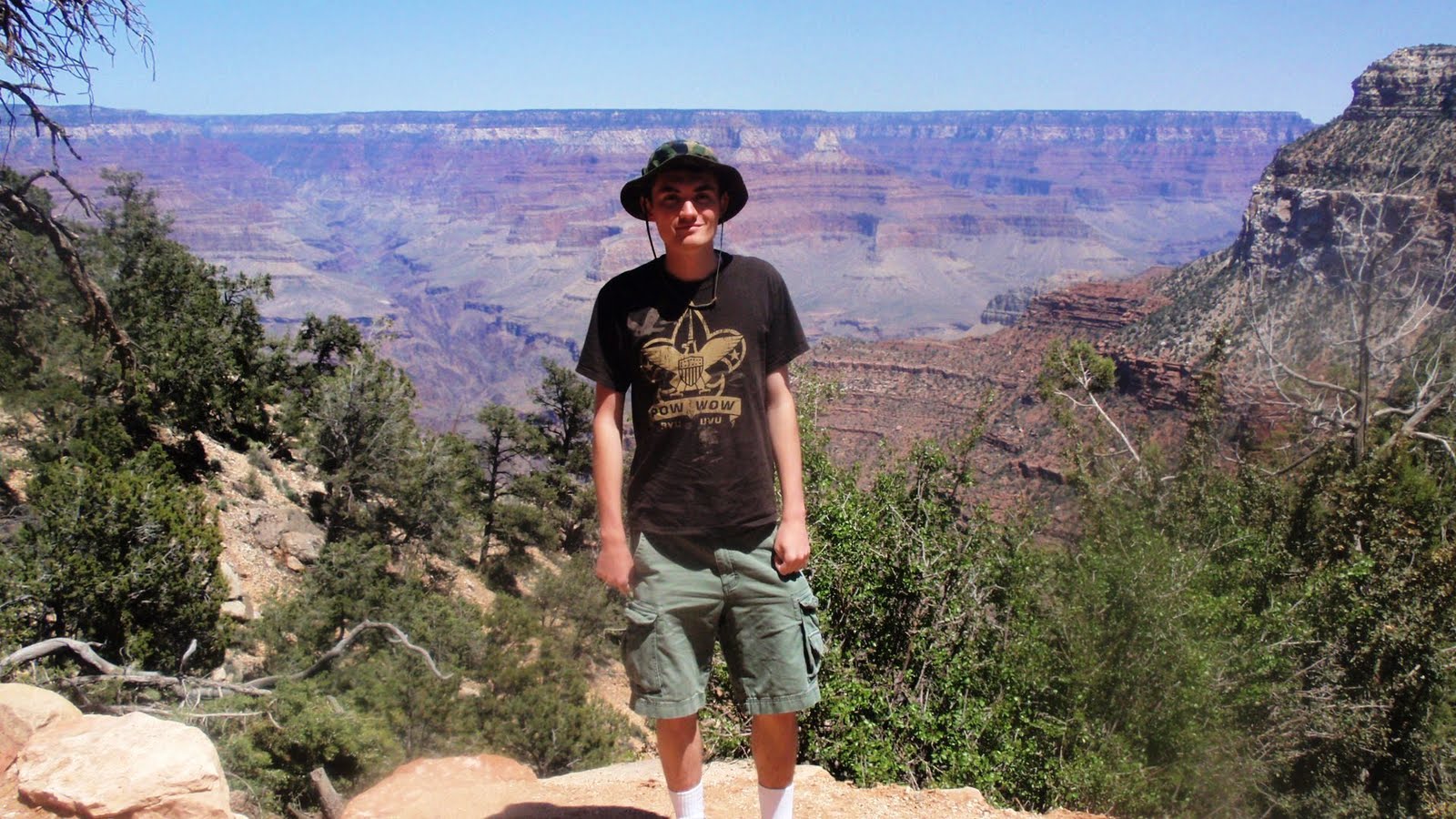
These photos are from a hike that Darren and I took in the Grand Canyon on Saturday, April 24, as we were traveling home from Utah. I drove up to Utah Valley on Wednesday the 21st and stayed two nights with my brother Kelly in Orem. (I also got to see my other brothers while I was there.) Darren and I left Provo on Friday the 23rd, heading south through Manti and Panguitch on U.S. 89 and eventually spending the night in Kanab. My original plan was to drive the following day to the North Rim of the Grand Canyon and take a day hike down part of the North Kaibab Trail and back out; however, it wasn't until Saturday morning, when I mentioned our plans to a convenience-store clerk in Kanab, that I found out the North Rim is completely closed until mid-to-late May. Thus we decided to drive around, through Page and via the AZ 64 entrance to the park, to the South Rim. We hiked down the Bright Angel Trail to the 3-mile rest station and then back out, which proved to be all the hike I could handle in my current state of health and fitness. Later we drove down to Flagstaff and spent the night there before driving home on Sunday the 25th. I had a fun time and enjoyed Darren's company very much!
These photos are from Kiley's Albuquerque Youth Symphony concert on Sunday, April 10, 2010, which marked the end of her tenure in AYS. She was seated in the first chair in the cello section and had a short solo in one of the pieces they played (Respighi's The Pines of Rome.). The first photo shows the entire group as viewed from the mezzanine at Popejoy Hall. The second shows Kiley during the concert, directly to the right of Gabriel Gordon, the group's conductor. (For some reason, AYS started seating the violas on the outside a couple of years ago, leaving the cellos just to the inside.) The third shows Kiley and others standing on their chairs, a tradition for graduating seniors in the last concert of the season. And the last photo shows Kiley with Dorine and me after the concert. It seems strange that Kiley is already done with AYS (and, especially, that she won't be auditioning for it again next month); however, it wasn't quite as fun for her this year, as she had more friends in the group last year. Thus she's ready to move on -- she's decided to attend UNM this fall, and has to decide whether or not to accept the music scholarship it has offered her (on top of the usual "Bridge"/lottery scholarships available to New Mexico high-school graduates attending in-state universities), which may hinge on whether she has to declare as a music major.
I thought I'd post a few comments concerning topics about which I've commented before:
1. Music from the 60s. I continue to be amazed at the variety of old video available from the 1960s showing old rock and pop artists at the height of their popularity. A Youtube user with the moniker "nyrainbow" has uploaded a boatload of old footage from the mid-60s music program Shindig, which footage apparently only exists today as a series of kinescopes. Her "channel" is not to be missed! 2. The Gym. We are still going to Planet Fitness on Eubank Blvd. It has become a lot more popular since we first joined in October of last year, meaning one has to wait for a treadmill at times of peak demand. I'm having issues with my usual exercise routine due to the constant dizziness I've felt since our cruise in January, but I think I may be able to get by with some kind of interval training.
3. My Every Day Lunch. I now get an apple every day instead of a banana! That's the only change, however. 4. National Public Radio. I've finally grown weary of listening to NPR in the mornings. I find I have almost zero interest in anything they have to say, about virtually any topic, and consequently I've started listening to the local classic-rock station in the mornings instead. (Frankly, Ozzy Osbourne -- not to mention Ted Nugent -- is a greater voice of reason than Steve Inskeep, Renee Montagne and a thousand left-leaning NPR reporters! I've also stopped frequenting the "SuperTopo" climbers forum for the same reason: as fascinating as it can be to listen to people whose values and perspectives are completely different from my own, at some point I always conclude they're nuts, pure and simple.)
5. The Temple. I'm now almost 18 months into my two-year calling as an ordinance worker in the Albuquerque Temple. It seems almost preposterous to refer to a "two-year" calling, since most people stay on much longer than that -- and, in fact, the temple simply couldn't be staffed if that didn't happen -- but somehow I think I'll be ready to stop when I hit two years, especially if my mal de debarquement symptoms haven't abated by then. I still like going to the temple, but the notion of devoting every Wednesday afternoon and evening to it has become a little tiresome. (It's difficult to believe that the Albuquerque Temple has now been open for ten years!)
6. The Albuquerque Youth Symphony. Kiley is about to finish up her tenure in AYS -- the 2009-2010 season ends with the "Gala" concert (which features all of the orchestras in the AYS program) this Sunday evening at Popejoy Hall. It has been a good experience for Kiley, and we hope that it will inspire her to continue to develop her musical talents.
7. My Favorite Movies. I've gone back and embedded clips from Youtube for all fifty of my "favorite" movies that I first wrote about in April 2008. The list might be slightly different if I were making it today, but it's still pretty reflective of the movies I like most -- even if "R"-rated films are disturbingly over-represented.
8. Camping in New Mexico. It appears we might actually get to do some family camping this summer. Devery and Easton would like to go back to Villanueva State Park; Kristy and Chris reportedly want to so some overnight trips; and I'd like to go back to White Sands National Monument and Oliver Lee State Park. (With that many people pulling Dorine out the door, she just might agree to go!)
9. Hiking in the Sandias. I don't have very many specific hikes that I want to do in the Sandia Mountains this summer, but John Brewer and I have the goal of hiking the entire Crest Trail in one day. I can remember wanting to do that in my late 20s, although it never quite happened. I think I'm still capable of it, even at 50/51 years old -- the question is how will I feel afterwards(and whether I'll ever be able to walk again). We will almost of a necessity go from north (Placitas) to south (Tijeras), simply because the principal elevation gain occurs earlier in the hike that way, although I'd prefer to go south-to-north just for something different. I've told John that I will brook no shortcuts: we must stay on the Crest Trail the entire way.
[Photo is from the summer of 1992 -- about the time I quit being a lawyer and went to work at Sandia National Laboratories -- and shows what our family room used to look like. Check out that old IBM AT personal computer!]
It's now been about two-and-a-half months since we returned from our 25th-anniversary cruise in the Caribbean, and I have been suffering from vertigo that entire time. Treatment with antibiotics and Scopolamine transdermal patches hasn't helped noticeably, and the effects of the vertigo have been extremely debilitating (not to mention bewildering and dismaying). Rather than try to describe what I'm going through in my own words, I thought I'd use excerpts from the WebMD website:
Vertigo is the feeling that you or your environment is moving when no movement occurs. Imprecisely called dizziness, the term vertigo is the specific term used to describe an illusion of movement. Unlike nonspecific lightheadedness or dizziness, vertigo has relatively few causes. ... Vertigo may...be caused by inflammation within the inner ear. This is known as labyrinthitis. This condition is characterized by the sudden onset of vertigo and may be associated with hearing loss. ... To determine if true vertigo exists, you must describe a sensation of disorientation or motion. ... The duration can be from minutes to hours and can be constant or episodic. The onset may be due to movement or change in position. ... The majority of cases of vertigo are harmless. And although vertigo can be extremely debilitating, it is easily treated with prescription medication. ... Specific types of vertigo may require additional treatment and referral: Bacterial infection of the middle ear requires antibiotics. ... The prognosis depends on the source of the vertigo. Vertigo caused by problems in the inner ear, while usually self-limited, in some cases can become completely incapacitating. The use of drugs and rehabilitation exercises are the mainstay of treatment. Most commonly this will make the symptoms completely go away or make the condition tolerable.
The onset of my vertigo occurred either on the cruise or as we debarked in San Juan. I ran on a treadmill in the cruise ship's gym four times while we were passengers, but only the last time was while we were actually on the open sea. I remember struggling to keep my sense of equilibrium while the treadmill was rocking side-to-side with the ship (the irony is that that is how a treadmill on dry land has felt to me ever since we came back). It's common for cruise passengers to take some time to adjust to being back on shore, so initially I didn't think much of the fact that everything seemed to be moving. It appears now, however, that I picked up some kind of hardy bug during the cruise that has caused a long-lasting infection in my sinuses and/or inner ears. It's probably viral in nature, as a standard course of antibiotics didn't touch it. I have an appointment with an ear-nose-throat specialist in late-April (having consulted already with our primary-care doctor), but that's little comfort. I'm certain there are plenty of people with terminal illnesses who don't feel any worse than I do at this juncture!
[Update 4/1/10: What I have now seems more likely to be "mal de debarquement". It's reportedly rare for a man to get it, but everything fits, right down to the fact (a) that it isn't caused by an infection of the sinuses or the inner ear (which I really don't think I have), and (b) that neither Meclizine nor Scopolamine has any effect on it, whereas Temazepam (one of the sleep meds I use, and a benzodiazepine) seems to help somewhat. It's really dismaying to know that the symptoms of MDD can last for years, however -- I don't think I can live like this indefinitely!]
Going to a drive-in movie theater was one of my favorite things to do as a child. Every once in a while, my mother would tell us to run, put on our pajamas, and grab our pillows, and we'd be off to see a movie at one of the various drive-ins in Albuquerque. I'm not sure now just why I enjoyed it so much -- it certainly wasn't the quality of the viewing experience, especially with the dime-sized speakers that one hung on his car window in order to get audio -- but I think there was a definite sense of adventure that went with seeing a movie and never having to leave the car. (Usually, there was a second feature that would last until well after midnight, during which we kids would invariably fall asleep, which in turn was Mom's cue to go home.)
The photo above shows the combined concession stand/projection room at the Terrace Drive-In, which was located on the south side of Central Ave. between Eubank Blvd. and Wyoming Blvd. (The Terrace had a very distinctive neon sign on the back of its screen, featuring a Flamenco dancer.) Adjacent to the Terrace was the Wyoming Drive-In, which was accessed from Wyoming Blvd. -- the structure of the old sign is still in place, at the entrance of what is now a mobile-home park. Other drive-in theaters that I remember going to when I was a kid were: (1) the Tesuque Drive-In, which was in a residential neighborhood west of Wyoming Blvd. and north of Central Ave. (a city park and community center are located there now); (2) the Duke City Drive-In, which was on Carlisle Blvd. north of Menaul Blvd. (a Wal-Mart store is located there now); and (3) the Silver Dollar Drive-In, which was on the east side of San Mateo Blvd. north of Montgomery Blvd. (There were other drive-ins in town, but they were further away and we rarely, if ever, went to them. Later on, someone had the idea to open a multi-screen drive-in, the Albuquerque 6, which was on the west frontage road of I-25 north of Montano Rd. I can remember going there as late as the mid-1980s, although eventually it, too, went under. I think it is now the location, more or less, of the Century 24 [walk-in] movie theater.)
The drive-in movie theater is a part of Americana that has, generally (and lamentably, from my point of view), gone the way of the dodo. Cable/satellite TV, combined with the advent of the VCR and DVD player -- not to mention changing public tastes with regard to video and audio fidelity -- pretty much killed it. However, I have lots of fond memories of the days when there were few things more fun to do than hop in the car and go see a movie.
[Update 4/12/10: I was just thinking about one of Cheech and Chong's old routines, called "Pedro and Man at the Drive-In." At one point, Chong [Man] is off at the snack bar, and Cheech [Pedro] starts watching the movie as the Charlie Chan character solves the murder: "Every-a-one een thees-a room have-a moteev for keeling Meesta Tayla. But Meesta Tayla only have-a one keela. And deh name of dat keela ees..." [~static~] "Ladies and gentlemen, snack bah remehn open nodder feefteen minutes -- after dat ees closed fah dee eevning." (And then, of course, the closing music plays, so we never find out who the killer was -- classic C&C!)]
[Update 10/17/12: Below is a photo from Google Earth, showing the erstwhile locations of three of the drive-in theaters mentioned above, as well as my parents' home, some of the schools I attended while growing up, and other landmarks in the area.]
 Well, the U.S. lost to Ghana today in the "round of sixteen" of the World Cup finals, which is disappointing, especially after the heroic efforts the team put forth to make it out of the group stage. In truth, the U.S. simply isn't among the elite soccer nations, nor is it poised to enter their ranks. That's probably puzzling to a lot of the world, given our population of some 300 million people, but our talent pool is overwhelmingly diluted by other sports that appeal much more to most Americans (basketball, American football, baseball, boxing, track and field, etc.). That said, the U.S. did better in the tournament than a number of inarguably "elite" soccer nations -- France and Italy being chief among them -- and it won its group over England after tying with the Brits head-to-head and scoring more goals in the three group-stage games. (The two-goal comeback against Slovenia, and Landon Donovan's electrifying winner against Algeria in stoppage time, will be the stuff of American soccer legend.)