Sunday, October 3, 2010

Seeing a Neurologist

I have now had an initial consultation with a neurologist about my (self-diagnosed) problems with mal de debarquement.  He did a cursory neurological exam on me last Tuesday, September 28, and ordered blood tests and an MRI of my brain.  I had the MRI done on Friday, October 1, and I expect the neurologist to get the results of both the blood work and the MRI in a day or two.  Finally, I have another appointment with him in mid-November to run electrical tests.

All of this is a process of elimination, and if all goes as I expect, we'll have eliminated multiple sclerosis, amyotrophic lateral sclerosis, brain cancer, etc. as causes of my condition.  Which will leave me in the same boat (no pun intended) I've been in since January, with an extremely debilitating malady for which there is no affirmative method of diagnosis and no real treatment.  I almost wish I had some fatal illness, as I don't want to live like this indefinitely.

The doctor's neurological exam did reveal some loss of feeling in my lower extremities, something I already knew about (and which pre-dated my dizziness), as I have a constant burning sensation in my feet.  I'm interested to know if the blood work will reveal the origin of this peripheral neuropathy.

[Update, 10/8/10: The results of the MRI and most of the blood tests came back.  The MRI showed no sign of a tumor or damage from a stroke, and the blood tests have come back normal thus far.  Just what I expected.]

The Stationary Bike versus the Treadmill

I've now been riding a stationary bike for my exercise, instead of running on a treadmill, since roughly the beginning of July.  This was a big change for me, since I'd run on treadmills since the early 1990s -- first at home in our garage and then, beginning in December 1999, at a gym.  However, two factors finally convinced me to switch to the bike: one, with a bike I constantly have five points of contact with the apparatus (compared to only one, or even none, with the treadmill while running), making it highly unlikely that that my mal de debarquement dizziness would cause me to fall off; and, two, the bike is much easier on my joints.  (I finally pulled an achilles tendon on the treadmill, which pull I aggravated every time I ran; the only way I could get it to heal was to do some lower-impact exercise, and the bike fit the bill.)

A big change for me was how I'd measure progress with a stationary bike; I mean, with running I'd simply count up the miles I ran, but a mile on a bike is a totally different unit of measure.  I quickly decided just to bike for thirty minutes on each visit and go as far as I could at a certain of level of resistance that is neither too easy nor too difficult.  And that's where I'm at.  My brother Kelly gave me a nice stationary bike that he was getting rid of, so I actually have a "home" option now, too, although (a) it doesn't have an odometer (making me "guess" about the mileage), (b) I had to go get a "gel" seat cover for it, since it has a "prostate punisher" racing seat on it, and (c) I generally just go to Planet Fitness with Dorine and Mike and Judy P______. 

Saturday, September 25, 2010

An Analogy

This post (with only slight editing) comes from an entry that I wrote in my journal on August 17, 2010:

I was thinking of an interesting analogy involving the church last night.  I was remembering how I took Darren out to the Albuquerque Academy [exclusive private school] when he was finishing fifth grade and had him take the entrance exam there.  What I didn't know at the time was that AA didn't (and still doesn't) have merit-based financial aid, and though Darren was accepted, we didn't qualify for need-based financial aid (by most people's standards, we were, and are, pretty well-off, although of course our paying tithing and having four kids at home at the time made us a lot "poorer" than we appeared on paper).  I came to the conclusion that AA was a rich kids' school, and that the school administration was doing what it had to do to keep it that way.  Oh, it provided "scholarships" to less-well-off kids as a means of avoiding the "elitist" label and to assuage the consciences of the elitists who ran the place, but the fact of the matter is that it purposely made the financial burden of attending school there so inordinate to the means of the middle class that the middle class would be greatly discouraged from sending their kids there.

I'm sure there are middle-class families who make great sacrifices to send a child or two there (the D_____s [members of our ward], for one, sent both S____ and J____ there, although I understand that they were sufficiently "paper poor" that they got half-tuition scholarships based on need).  However, I keep coming back to this idea that the middle class must make wildly disproportionate sacrifices to send a kid there.  (Clare S________ [a lady I used to work with] and her husband send two kids to AA -- she works full-time largely so that they can afford it.)

Anyway, there's the tie-in to the church in my mind.  Clearly, there are three "spiritual" classes in the church: (1) the "upper" class, for whom serving in church callings is not much of a burden or stretch; (2) the "lower" class, who, being low on resources, aren't expected to do much (but who are, still, allowed to feel good about themselves); and (3) the "middle" class, who are judged to have resources but who, in fact, aren't as "gifted" spiritually as they seem "on paper."  The latter, in which group I fall squarely, can fully participate in church membership and even be highly thought of, but they must sacrifice at a level which is inordinate to their means.  Clearly, some do, but most end up questioning the whole notion whether the rewards are worth the sacrifices, and thus they "renege" on making those sacrifices.

Is going to AA that advantageous to a kid?  The quality of education there is presumably high, but are the marginal (i.e., incremental) academic benefits worth the price?  I'd say probably not, as it is possible to get a decent education in the public schools for a kid who is disposed to seek it out.  But there is one clear benefit to kids who do go to AA -- I haven't met an AA grad yet who didn't have an extremely high opinion of himself, and self-esteem (even if not fully merited) can, of itself, be a great reward.  Those who do fully "participate" in church membership, holding down heavy leadership positions, tend to acquire great self-esteem as well (regardless of how good people they really are), but I am of the opinion that the calling doesn't make the innate person.

In any case, I clearly have made the decision that the disproportionate sacrifices I'd have to make to break into the "elite" ranks of church membership are simply not worth the rewards, and perhaps it's simply because I've never fully bought into church doctrines.  I seem to think that the alternative (the "public school" option, if you will) is just as good, and a whole lot less-expensive.  That says a lot about my testimony or lack thereof.  But it is really difficult to be lukewarm as I am, feeling that even if the church is true, my paying tithing, attending church, working in the temple, doing home teaching, etc., isn't buying me anything outside of keeping my marriage together.  In fact, it makes my life miserable to such a degree that I often wonder if my marriage (or, by extension, my life) is worth keeping together.

I feel like Clark Gable (as Rhett Butler) at the end of Gone With the Wind, when he tells Vivien Leigh (as Scarlett O'Hara/Hamilton/Kennedy/Butler), "No, I'm through with everything here.  I want peace.  I want to see if somewhere there is something left in life of charm and grace."  I feel the same way about the church -- I'd like to live out the rest of my life (the church having mucked so much of it up to this point) trying to find charm and grace, instead of hating the world.

[Update, 9/27/10: The logical conclusion of my having decided that the Albuquerque Academy is an elitist institution, then comparing it to the LDS church, is that I think the latter is also an elitist institution, and I'm not sure I'd go quite that far.  There obviously are plenty of elitists in the church, but the people whom I describe above as the "spiritual middle class" of the church are, and heretofore always have been, its lifeblood, paying most of the tithing, holding most of the callings, making most of the home-teaching visits, bearing most of the guilt trips, etc.  The observation I would make, however, is that if this type of person isn't already a member of the church, the likelihood that he would be receptive these days to the missionaries and their message is slim.  Just as the Albuquerque Academy was way too expensive for us, the sheer expense of church membership (and tithes and offerings are just one part of that expense) is simply too great for most people compared to the perceived incremental benefits.  And thus the "lifeblood" of the church drains away, drop by drop.]

[Update, 10/2/10: I was impressed by Elder Jeffrey R. Holland's talk in General Conference this morning, in which he actually acknowledged, and expressed gratitude for, the contributions made by the "little people" in the church.  What a rarity....]
Thursday, September 9, 2010

The Artist as a Growing Boy


These old photos show me at age 11 (Fall 1970) and age 12 (Fall 1971), respectively.  (Look how much darker my hair got in just a year!)  Both were taken by my mother -- obviously on Sundays, as I'm wearing what was church attire for me at the time.  (I always shake my head at the fact that Aaronic Priesthood holders are now "required" to wear white shirts and ties to administer the sacrament in church.  Heck, I'm not sure I owned a white shirt until I went on my mission, and I hardly ever wore a tie, to church or anywhere else, until I was much older.)  I was always thin, although by today's standards I wouldn't be considered painfully so.  (I remember that the girls next door, who were anything but svelte, thought they were being cute one time by requesting information on the Charles Atlas body-building program in my name and having it sent to my address.  I seriously considered returning the favor by requesting information on some weight-loss program in their names, but I never got around to it.)

The photo on the left, taken when I was in sixth grade (which I can tell by the octagonal wire-frame glasses I'm wearing), shows me with my very first electric guitar, a single-pickup Harmony (model "POS") that my mother paid $15 for at a garage sale on the next street over.  I can't remember whether I really knew any chords at the time, but, regardless, I didn't start playing a lot of guitar until I was about 14, when my brother Kelly went on his mission to Taiwan and left his 12-string acoustic guitar behind.

The photo on the right, taken when I was in seventh grade (which I can tell by the plastic "aviator" glasses with the photo-gray lenses), shows me astride Kelly's Honda 350 motorcycle.  I wasn't actually riding it, although I had a deep lust at the time for a motorcycle of my own, voraciously reading various motorcycle magazines every month; my parents finally bought me my Honda CL-70 the following summer.  I almost "inherited" the 350 when Kelly went on his mission in September 1973 -- I did get to ride it for a short time after he left, which was a real thrill for a 14-year-old -- but my mother quickly sold it to a guy in our ward who was a couple of years younger than Kelly.

It's interesting to take note of the cars in the background in the two photos.  On the left, the gold car is my brother Jeff's 1968 AMC Javelin, which he later painted maroon (and which stayed in our family for a while after it suffered a wreck that mashed in the passenger door -- it was one of the cars in which I learned to drive).  The car behind it is my father's 1952 Chevy (called "Bartholomew" by my cousin and me), which he bought from an older lady who supposedly won it, brand-new, playing craps in Las Vegas.  (I remember taking "Bartholomew" on a joyride up in the "mesa" with my friend Ken Foley, shortly after I got my driver's license in 1974.  The car didn't have a current registration, so we switched license plates with another car; of course, I ended up getting pulled over by a cop -- my first time -- and being cited for having the wrong tags on the car.  Ken and I scrounged the money to pay the fine so that I wouldn't have to confess to having taken the car without permission, and I didn't tell my mother about it until years later.)  On the right, the light-colored car with the dark roof is my brother Robin's (1970?) Ford Maverick, which he drove for a number of years, and the car behind it and to the right is my parents' old 1965 Ford station wagon, which was our "family car" from roughly 1967 to 1973.

Monday, September 6, 2010

Hike in the Sandias, 9/3/10

Satellite View of the Trail
Typical Stretch of Trail
Me
Well, on Friday I tried hiking in the Sandia Mountains for the first time this year.  I felt like I'd been doing a little better, off and on, in the previous few weeks and wanted to see how I'd fare on the trail, so I made plans to hike the Embudito Trail with John Brewer and Jimmy Romero.  Notwithstanding the fact that we got a late start (due to an appointment Jimmy had with the eye doctor), our plan was to hike all the way to South Sandia Peak and back, but it was apparent early on that I wasn't going to make it that far.  In fact, for a while I thought I was going to have to turn around where the trail crosses over to the south side of the main drainage, which (at least according to the guidebook) is only a couple of miles into the hike; finally, however, after gobbling a couple of handfuls of trail mix I was able to keep going all the way to Oso Pass, but I simply couldn't have made it to the Peak, which is two really brutal miles beyond the Pass (see attached photo of South Peak taken at Oso Pass).  I told John and Jimmy that they should go "tag" the peak and catch up to me on the way down, but the hour was getting late and they decided to turn around with me.  The hike down was easier on me than the hike up, but, frankly, I was amazed, given how bad I'd felt on the ascent and the steepness of the trail, that I made it up as far as I did.

I've never had much in the way of aerobic capacity, but the difference between what I could hike last year and what I can do this year is stark. "Disembarkation Syndrome" truly has left me feeling twenty years older!  I'm left wondering if I'll ever see South Peak, my favorite place in the Sandias, again, as there is no easy route to get there (in fact, Embudito Trail is probably as "easy" a route as there is).

John
Jimmy
View of South Sandia Peak from Oso Pass
View up Embudito Canyon from Near the Drainage Crossing

Tuesday, August 24, 2010

January 2010 - A Life-Altering Month


I was looking through old PDF files on my personal laptop computer and found the attached copy of the invoice for the cruise that Dorine and I took in January with Mike and Judy ______. (See photo above of Dorine and me in Bridgetown, Barbados.) It's rather ironic to think back on (a) how much I looked forward to the trip to the Caribbean and (b) how much I enjoyed myself while I was there, then to compare those feelings with my fervent wish now that we'd never gone, which would almost certainly mean that I wouldn't have acquired chronic, life-altering problems with "disembarkation syndrome." I still hold out hope that one day soon my equilibrium will return to normal and that I won't feel sick every afternoon and evening, but every time thus far that I've imagined some improvement, it has turned out to be just that -- my imagination.

Perhaps I feel too sorry for myself; after all, I have relatives, much younger than I, who have worse health problems with longer-term implications. But to think that all this came about simply because I chose to run on a shipboard treadmill on Friday, January 15, while we were on the open sea, is almost more than I can bear. If I'd had the slightest inkling of what it would do to me, I'd have sworn off the treadmill for the entire week -- but a fat lot of difference it makes now.

Thursday, August 5, 2010

Random Thoughts, Part 4

1. Whenever I think of the Democratic agenda in this Congress and under this administration, I can't help but think (reminiscent of the film Field of Dreams) of the line "If you build it, they will come." The Dems seem to think that through their foisting European-style socialism and government spending on this country, we the people will feel compelled -- or have no other choice but -- to come along for the ride when it comes to massive tax increases (whether they're called that or something else). And, absent some fiscal sanity in Washington, those tax increases, and all the economic havoc they will wreak, are hunting us down like hound-dogs on our trail.

2. I had to laugh a few weeks ago when President Obama's handlers orchestrated some sort of public appearance or photo op to assure people he's not anti-business; however, as the saying goes, actions speak louder than words, and I don't think many people in their right minds regard Obama as pro-business. And the simple truth is: you cannot be anti-business and plausibly claim to be pro-economic growth -- which helps to explain why a nearly trillion-dollar "stimulus" package has had virtually no effect other than to add markedly to the national debt and to people's fears about a federal bankruptcy and a collapse of civilization. What company is going to expand, or hire more employees, when the government keeps head-faking in one direction before moving in the other?

3. The recent federal court decision in California casting aside the Proposition 8 ban on same-sex marriage is a great illustration of how a tyrannical bench will continue to thwart the will of the people, which in this case was expressed about as clearly as it can be -- by way of a directly democratic plebiscite to modify the state constitution -- and impose its own policy preferences. All that activist judges need do to accomplish that is to keep inventing new and previously unheard-of applications of the 14th Amendment "equal protection" and "due process" clauses; one has to admit that the notion that they bar a state constitution from being amended to preserve a societal status quo is pretty novel! Heck, I figure it's only a matter of time before someone (undoubtedly somewhere in the jurisdiction of the Ninth Circuit Court of Appeals, that loony bin of bizarro jurisprudence) rules that the very notion of electing Republicans somehow violates the 14th Amendment!

4. I also found a great deal of irony in recent statements by John Mellencamp running down the Internet and calling it the most dangerous invention since the atomic bomb, insofar as it has "destroyed" the music industry. I agree that digital music, in combination with the Internet, let the genie out of the bottle with regard to piracy and effectively ended the notion of artists' and record companies' making tons of money off the sale of CDs. I also agree that piracy is a bad thing and that it's a shame that a whole generation of kids are growing up with virtually no regard for intellectual-property rights in and to a variety of artistic endeavors. What I find ironic, however, is that many artists, probably including Mellencamp, are equally contemptuous of other people's ability to make a lot of money in an increasingly sclerotic American economy -- they seem to think that they (along, perhaps, with a few people involved in "green" energy industries) are the only ones entitled to be rich. It is for that reason that I tend not to feel too sorry for them.

5. I've now been released from my Sunday School teaching calling, as I advised our bishop that my chronic health problems were starting to make it impossible for me to continue. However, my last lesson was about the prophet Elijah and how the northern kingdom of Israel, under King Ahab and Queen Jezebel, had once more reverted to idolatry and paganism. The Israelites no doubt self-identified as the chosen ones of God, being descendants of Abraham, Moses, and Jacob/Israel, yet they found themselves continually following after pagan gods and the accompanying pleasures of the flesh. One may say they were the kings of cognitive dissonance, professing one set of beliefs but living their lives in accordance with another. When I threw out the idea that perhaps we modern Mormons tend to do pretty much the same thing (if perhaps on a smaller scale), no one in the class -- which, for once, was full because the other Gospel Doctrine teacher was home with sick kids -- dared touch it. I considered the ensuing silence to be instructive.

6. I haven't been able to hike in the Sandia Mountains at all this year due to my ongoing problems with dizziness. I remember talking to (my friend and soon-to-be-ex-supervisor) John Brewer a couple of years ago about his father, who had told him that the worst part about growing old was no longer being physically able to take long hikes in the mountains. I agreed, saying I wasn't looking forward to that time -- little did I know how close to it I was already!

7. We're about to give away, finally, the Dodge Shadow that we bought new in 1994. We had got to the point where no one in our family would drive it, but I'll still miss it a little. We originally bought it for me to drive to work, but all of our kids learned to "drive a stick" in it (during many a session in the Wilson Stadium parking lot), and it served as the primary car for each of our three younger kids in turn. It has taken several trips to Utah (and will take one more here shortly to its new home), at least three trips to Las Vegas that I can remember, numerous trips to the cabin, etc. I'd say we got more than our money's worth out of the car, and I hope it serves its new owners well.

Tuesday, August 3, 2010

My "Doubling" Day

Today, I hit what I regard as a significant milestone in my life: I've now been married as long (9,359 days) as I was old when I got married in late 1984. It isn't the sort of event that many people mark in their lives, or necessarily even think about; thus it's probably a strong indication of my offbeat thought patterns that I think about such things. Of course, the first 9,359 days of my life loom larger in my memory than do the second 9,359 days, simply because time seemed to pass more slowly in the early part of my life than it does now -- these days, I can hardly keep up with the years' passing and rarely can guess right as to how much time has passed since events that have taken place in our family. (If I guess, say, four years, it almost inevitably means that at least six or seven years have gone by since the event in question.) I do regard myself as fortunate that I married someone who could put up this long with my faults, foibles, and eccentricities.

Friday, July 16, 2010

July '10 Utah Trip


Dorine and I drove up to Utah with Dorine's dad, Lynn Wilson, on Friday, July 9, and stayed at Dorine's brother Brian's house in Grantsville until we came home on Wednesday, July 14. We got to spend quite a lot of time with Darren, who's living in Provo pending the start of the fall semester at BYU and is looking for part-time work that he can do while attending school. We didn't do a whole lot while in Utah, but we did visit with some of Dorine's relatives in Salt Lake City (the photos above include one with Dorine's Uncle Bob and his wife Marilu, who live near 3900 South and 2300 East in Holladay, and another with her Aunt Frances, who lives near Liberty Park in what was Lynn's childhood home). We also got to see three of my four brothers (Robin, Jeff, and Kelly -- we missed Roger) and had dinner with them one evening at the Sizzler on State Street in Orem north of University Parkway. (See photo above, taken after Jeff and Kelly had left.) The other two photos show (a) Brian's (and his wife Dona's) kids in their living room in Grantsville, and (b) Dorine and me with Darren in the parking lot of Stadium Terrace in Provo, where his new apartment is located.

Despite my love for the road, the drive to Provo/SLC/Grantsville has grown pretty old, and I keep looking for different routes to relieve the tedium. This time we drove north from Farmington through La Plata, Red Mesa, and Hesperus to U.S. 160, which I've done several times previously, but then we headed northwest from Mancos, a route that "cuts off" Cortez and intersects with U.S. 491 between Cortez and Dove Creek. That sounds great in theory, but the roads are narrow and winding, and there's a lot of tractor, horse trailer, and truck traffic on that route, which makes passing a dicey proposition and any "savings" of time or distance questionable; therefore, I'm not sure I'll drive that way again. On the way home, we were stopped for almost an hour due to road construction between I-70 and Moab, which practically drove me ape; it's a great argument for driving at night!

Saturday, July 10, 2010

Mal de Debarquement News Story


This video of an ABC News story is now a few years old, but it concerns a couple of ladies who were suffering greatly from mal de debarquement. The older one, Deb Russo, was much more physically disabled from the ailment than I am (at least for now). And the younger one, Kimberly Johnson, couldn't even read because of how the page seemed to move in front of her eyes, whereas, thankfully, my problem is limited to the ground's feeling (but not looking) like it's moving under my feet. However, like both of these ladies, I do feel some relief when I'm driving a car, and the ailment has had, and continues to have, far-reaching effects on my life. I'm contemplating asking to be released from my Sunday School calling at church, and it's virtually certain that I will not continue as a temple worker beyond October. Stress of all kinds aggravates my symptoms, so I'm having to pare back a lot of my activities. I'm still trying to go to the gym, but for now I'm having to ride a stationary bike instead of running on a treadmill.

Monday, June 28, 2010

Cheech & Chong Live in "Concert"

Someone gave my son-in-law Chris two complimentary tickets to see the Cheech & Chong "concert" on Saturday night. Chris and Kristy weren't going to use the tickets (they also had box-seat tickets for an Isotopes baseball game that evening), so, knowing that I was a C&C fan, they gave them to me as a late Father's Day present. I invited Darren along, and we drove out to the Sandia Casino at the appointed hour, not really knowing what to expect but hoping, somewhat naively, that C&C's performance wouldn't be totally gross and obscene. Well, whereas I have what I acknowledge to be a fairly crude sense of humor (at least for an active Mormon), most of the performance was totally gross and obscene even by my standards, which reminded me (a) why I never bought any of C&C's albums beyond the first two, and (b) why I never saw any of their movies after the first two came out. Still, I enjoyed spending the evening with Darren -- I hope he wasn't too offended -- and I got a few laughs out of the show, particularly from (a) Cheech's reprise of his lip-synched performance of the "Earache My Eye" song, in a pink tutu, from the film Up In Smoke (his exit from the stage afterward, using a bright-yellow walker, was an especially funny embellishment), and (b) Chong's comment on why he decided against being homosexual ("But then I thought to myself, 'There's poop in there!'"). I remember reading somewhere, possibly in People magazine, that Tommy Chong complained for years that Cheech Marin would no longer tour with him; it's apparent that concert tours are now so lucrative -- whereas sales of CDs and other media are so depressed -- that Cheech could no longer turn him down.

Anyway, I guess I can mark "See Cheech & Chong perform live" off my list of things to do before I die -- and Darren is gone now, having left today to go back to Provo.

Saturday, June 26, 2010

The U.S. at the World Cup, Part 2

Well, the U.S. lost to Ghana today in the "round of sixteen" of the World Cup finals, which is disappointing, especially after the heroic efforts the team put forth to make it out of the group stage.  In truth, the U.S. simply isn't among the elite soccer nations, nor is it poised to enter their ranks. That's probably puzzling to a lot of the world, given our population of some 300 million people, but our talent pool is overwhelmingly diluted by other sports that appeal much more to most Americans (basketball, American football, baseball, boxing, track and field, etc.). That said, the U.S. did better in the tournament than a number of inarguably "elite" soccer nations -- France and Italy being chief among them -- and it won its group over England after tying with the Brits head-to-head and scoring more goals in the three group-stage games.  (The two-goal comeback against Slovenia, and Landon Donovan's electrifying winner against Algeria in stoppage time, will be the stuff of American soccer legend.)

Here are a few observations on the tournament in general:


1. The refereeing, as usual, has left a lot to be desired -- the U.S. had to overcome two very bad calls that cost them goals, and several other nations (e.g., Chile, against Spain) received questionable "red cards" (leaving them down one player) that severely impacted the outcome of key games. Just why FIFA, the international governing body of soccer, continues to ascribe to the "multi-culti" school of thought concerning the use of relatively untested referees from third-world countries in the World Cup finals is beyond me.


2. The U.S. suffered greatly this year from the traditional flaws of past U.S. World Cup teams: an inability to finish prime goal-scoring chances, an inability to maintain possession in the midfield, a strong tendency to "go for the home run" on deep balls down the middle instead of building the attack on the wings, and a ball-watching back line that conceded early goals in three of the U.S.'s four games (and nearly did so in the other one). All of these shortcomings were on display today against Ghana, whose two goals came after (a) a bad give-away in the midfield five minutes into the game, and (b) an even worse "skinning," in extra time, of the central defense.


3. I think it's telling that all five South American teams in the tournament (Brazil, Argentina, Chile, Paraguay, and Uruguay) made it out of the group stage and looked strong doing so. Spain may still be the top-rated team in the world (and Germany and the Netherlands have played well), but I expect a team from South America to win the World Cup.

4. As much as I like soccer, I can fully understand why a lot of Americans don't care for it. There's something about a sport characterized by the following that offends American sensibilities. One, that scoring seems to depend at least as much on the Fates (not to mention the referees) as on individual skill, team play, and execution. Two, that esoteric rules, such as the "offside" law -- the origins of which lie in outdated notions of "fair play," but which seems to be called erroneously, even by the world's top referees, at least as often as it is called correctly -- have a tremendous effect on the game. Three, that obvious time-wasting tactics, not to mention "diving" in an attempt to fool the referee into calling a foul, are not punished to any appreciable degree (see the reference above to "fair play"). And, four, that one lucky score in 90 minutes of play can determine the outcome of the game. (Americans like to root for underdogs, but we also like to see the dominant team win -- at least when our national side isn't playing -- which often isn't the case in soccer.)

What is the future of American (men's) soccer? The U.S. side has now qualified for six consecutive World Cup finals, as it benefits greatly from being located in a region consisting of North America, Central America, and the Caribbean; however, there's no telling when it will be ready to advance into the semifinals or championship of the World Cup. The current generation of players will probably not be up to the task, and Major League Soccer, the American professional league, isn't nearly on par with the top European leagues. We'll probably know America is close when it wins a U-17 or U-20 World Cup.

[Update 6/27/10: The games today, Germany vs. England and Argentina vs. Mexico, highlighted one more reason why Americans might rightfully dislike soccer: the lack of video replay to review questionable calls, or non-calls, that determine (a) whether goals are allowed or disallowed, and (b) whether penalty kicks are awarded. Considering that the laws of the sport evolved on the quaint notion of "fair play," what could be more fair than to verify the correctness of calls on which the result of a game hinges? There's simply no question that video review today would have resulted in (a) Argentina's first goal against Mexico being disallowed for an obvious offside infraction, and (b) England's being given its clear (to everyone in the world except the assistant referee) equalizing goal in the first half against Germany. One can argue that the margin of victory in each of these games made the bad non-calls moot, but it is a soccer truism that the score dictates tactics, and no one can say what might have happened if the refs hadn't screwed up. My prediction: FIFA will find itself obligated to institute video replay --
despite its being an American (ptui!) innovation, and at least at the goal line -- by the 2014 World Cup finals. "Fair play" is practically screaming for it!]

[Update 7/6/10: Okay, so I was wrong about a South American side winning the Cup; in fact, the only South American country to make it to the semi-final round, Uruguay, was the fifth-place team in the CONMEBOL region. Boy, did Brazil and Argentina crap out!]

[Update 7/13/10: Spain has defeated the Netherlands for the World Cup Championship, capping off a series of clinical, efficient (but pretty boring) 1-0 wins in the four "knock-out" stages of the tournament. Again, the refereeing became a cause for criticism and had a noticeable impact on the game. FIFA will probably keep pretending that its referees aren't a factor in the outcome of games with world-wide import -- shoot, some commentators have gone so far as to imply that blown calls are characteristic of soccer and part of its beauty as a sport -- but I think most people, not just Americans, will agree that the best-refereed game in any sport is one in which the referees are barely noticed. I'll grant that soccer, especially as played at elite levels, is particularly susceptible to game-changing intrusions by refereeing crews, but a lot of that is due to tolerance of a whole host of player shenanigans, from clutching, grabbing, gouging, punching, and kicking to diving and faking injuries. (Virtually all set pieces in this tournament made the penalty area look like a groping party; once a referee lets a hundred fouls go by, how is it possible to call one without seeming arbitrary and capricious?) Something must be done to clean up the sport -- even if it involves stopping the game several times each half for video review -- or else FIFA risks losing audience. Oh, and one more thing: I agree with American commentators that an intentional handball on the goal line to prevent what was otherwise certain to be a goal -- as happened at the end of the Uruguay-Ghana game -- should simply be counted as a goal, and should not result merely in an expulsion and a too-easily-missed penalty kick.]

Monday, June 21, 2010

Mexico Trip, June 15-20, 2010


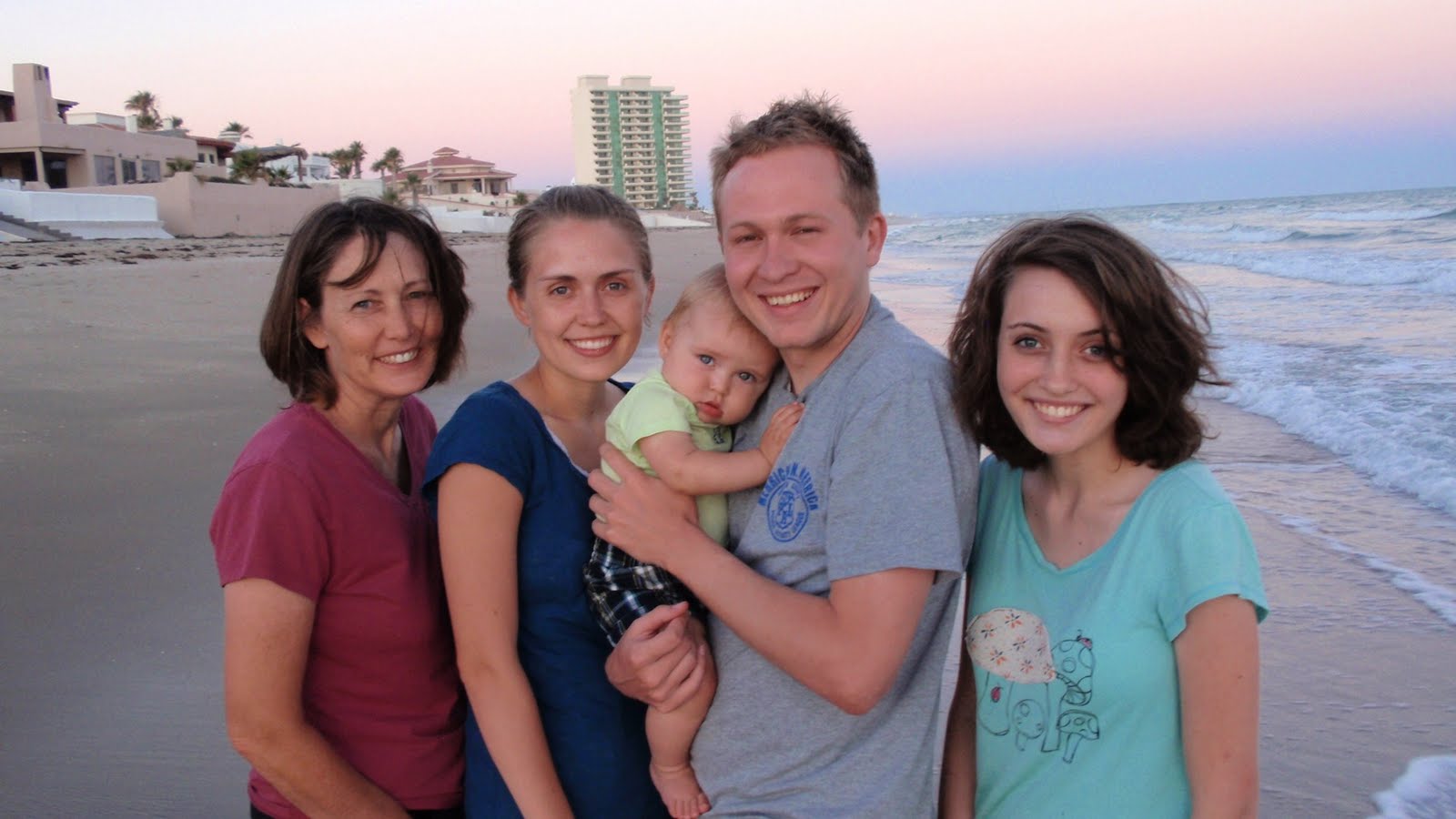
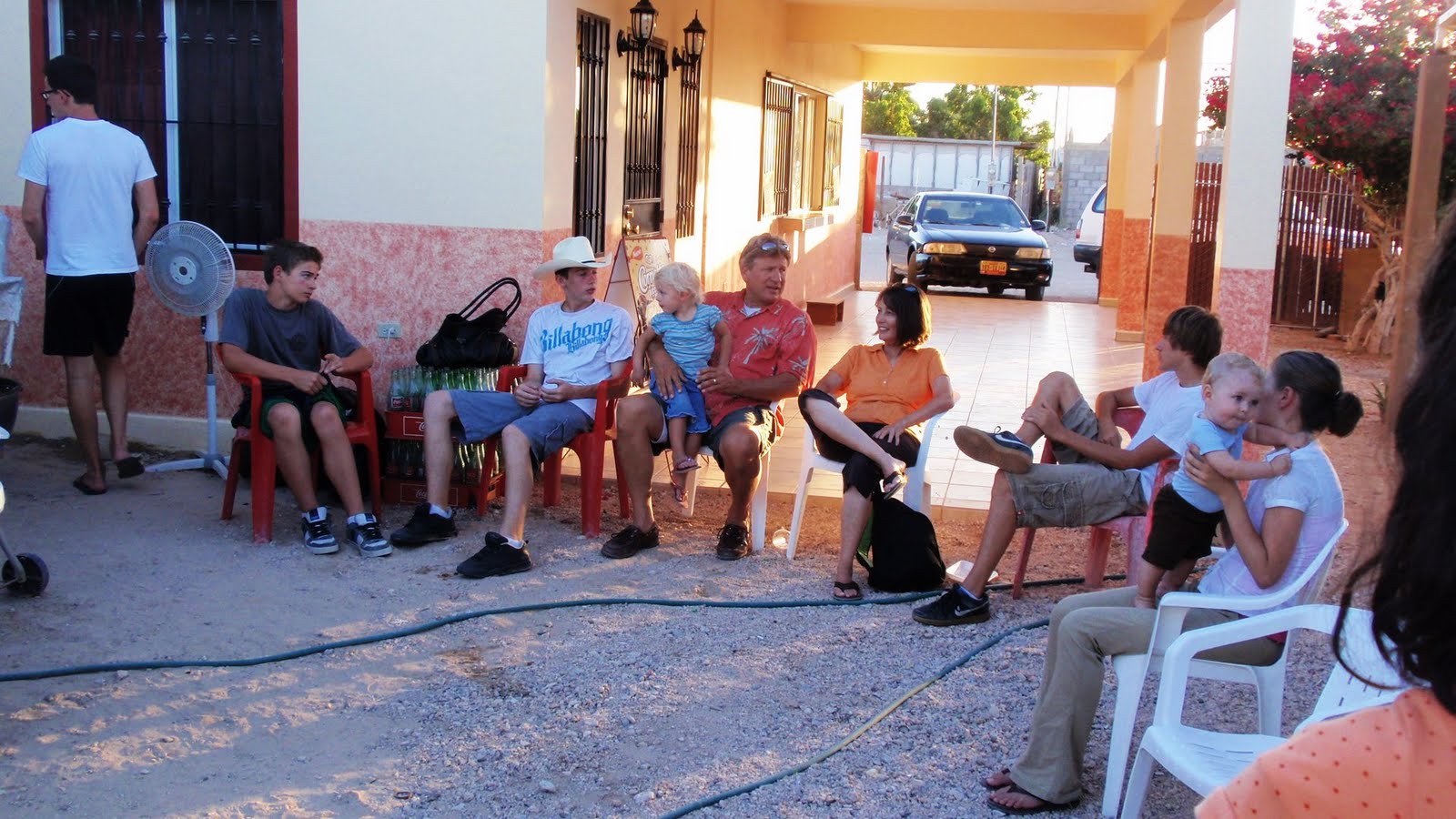
These photos are from our trip to Puerto Pe
ñasco, Sonora, Mexico; we left Albuquerque on the evening of Tuesday the 15th, spending the night in Tucson and driving on to Puerto Peñasco the following morning, and we drove back to Albuquerque yesterday, Sunday the 20th. We stayed in the Las Conchas district in "Casa Alhaja," a beachfront home of which Easton's parents, Steve and Jeannie H______, are part owners. This trip was a striking contrast to our last (and my only previous) trip to Puerto Peñasco in 1991, when Dorine's extended family camped on the beach at Choya Bay in tents, with no shower access and only one small port-a-potty to service ~20 people. "Casa Alhaja," on the other hand, has numerous bedrooms and five bathrooms (all with showers), while still having immediate access to the beach. Here's a partial run-down of the things we enjoyed doing while in Mexico: (1) swam and body-surfed; (2) rode ATVs; (3) rowed a boat out into the waves; (4) played volleyball and tossed around a football and a Frisbee; (4) foraged around in tide pools; (5) shopped (both for food and for souvenirs); (6) went out to eat a couple of times; (7) watched World Cup soccer games and Game 7 of the NBA finals (all online); (8) played "dos huevos" (a tossing game using two golf balls on a string); (9) took long walks on the beach; and (10) went and had a huge asado at the home of the Palmas family, a family of LDS church members whom the H______s befriended years ago (and whom they helped out over time by providing them with large quantities of second-hand building materials). I was in my usual crap physical condition, but at least I was able, largely, to ignore it for several days.

Sunday, June 13, 2010

Villanueva State Park, June 11-13, 2010


Dorine and I spent two nights camping at New Mexico's Villanueva State Park with family members. Both Devery and Easton and Kristy and Chris wanted to go camping with us, but Devery and Easton could only go on Friday night, whereas Kristy and Chris could only go on Saturday night. In essence it was like two camping trips in one, which was probably the only way I'd ever be able to get two nights out of a family camping trip. Dorine and I drove out to Villanueva in mid-afternoon on Friday, the 11th, in hopes that we could find an open campsite on the (Pecos) river; however, there seemed to be quite a few "parties" going on in the lower level of the park, and everything was full-up (and then some). Nonetheless, the upper ("El Cerro") campground had several open sites and in fact didn't ever fill up while we were there; given all the people in the park, and despite the steep path/road up the hill, I preferred to stay up there. We got what I now consider to be the best campsite in the upper campground, which has a great view on three sides (see the long-distance photo above of our campsite, looking east from one of the trails in the park), lots of space, and is relatively secluded.

So Devery, Easton, and Mason drove up later that evening, and we spent that night and much of the next day with them. I'd taken a couple of inner-tubes up without really knowing if we'd want to float on the river, but Devery and Easton were up for it, so I pumped up the tubes, and we floated several times from the park entrance down beyond all of the campsites. It turned out to be the most-fun thing we did during our stay at Villanueva, so I'll be certain to take inner-tubes on all future trips there. I also had a lot of fun playing with Mason, who's growing up fast and showing a lot of interest in what's going on around him.

Devery and Easton left in the early afternoon on Saturday, and Dorine and I had a few hours by ourselves before Kristy and Chris came up. (I took advantage of the "lull" and went and took a much-needed shower.) It turned out that Zach couldn't come because of a Little League all-stars practice that he needed to attend, but all the other kids came and were all a lot of fun to be with. I helped Chris put up their new tent (which, having sturdy poles, was much better-suited to the big winds we had for much of the time) while everyone else went down to the river and the playground. I slept poorly both nights, as sedation alone, without a breathing machine, no longer seems to put me out entirely; however, I felt well enough during the day to do a lot of things. (I'd say I'm encouraged, but I don't feel any less dizzy, discombobulated, and debilitated than I have felt since our cruise in January.)

On Sunday morning, Nicole and I tubed down the river a couple of times (Alexis went on the first run but insisted on being let off near the bridge half-way through). Then we packed up and came home. I had agreed to give a sacrament-meeting talk in Spanish in the Valle Vista Branch, which meets in our church building (having sacrament meeting at 2:15 pm), so I had to get home to shave, bathe, and make final preparations. I'd spent hours and hours preparing my talk, which consisted of about 20 minutes of material; however, I was the last of three speakers on the program, and as is often the case, the other speakers left me very little time. Thus I was only able to give about 25% of the talk I'd prepared, which made it seem entirely anticlimactic, relieved though I was to be done with it.


[Update 10/19/10: I found this photo of Villanueva, which I'd taken on an earlier trip there from the trail that traverses the cliff on the east side of the river.  It gives a good idea of the park layout, and you can pick out our campsite from this year's trip, which is marked by the shelter on the upper left that sits off by itself.]